
The short answer. Repair the door if the panels and the frame are sound and a single part has failed. A spring, a cable, a roller, a sensor, or an opener is a few hundred dollars. Replace the door when the panels themselves are rotting, delaminating, or bent, or when you are paying for the third big repair on a door past twenty years old. A new door and install runs well into four figures, so the decision comes down to the condition of the door.
Start with the one question that settles most of these
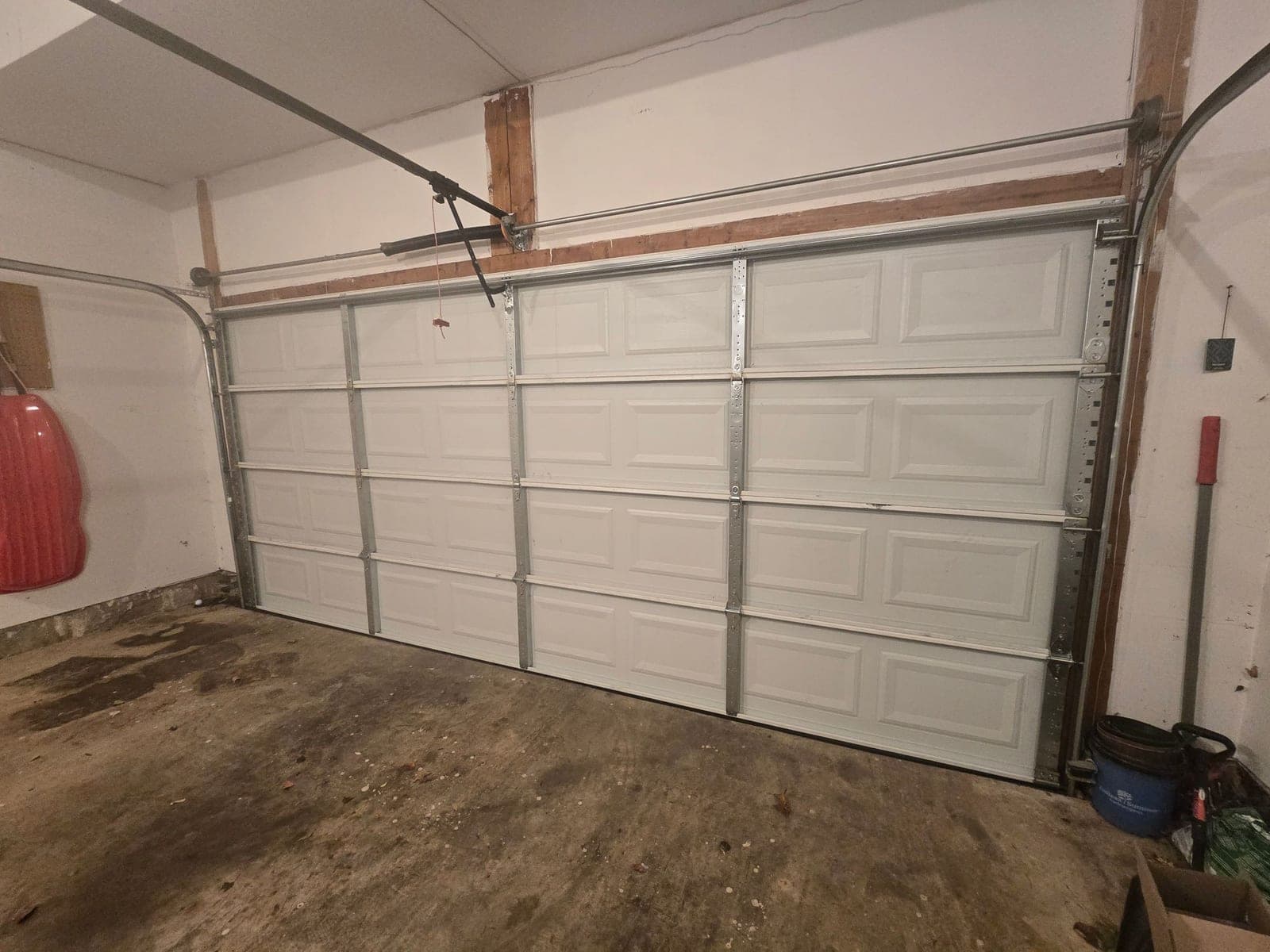
Is the door itself sound? A garage door is a stack of panels on a set of wear parts. The springs, cables, rollers, hinges, and opener are the wear parts. They are meant to be replaced, and they usually fail one at a time. The panels and the track are the door. If those are straight, solid, and holding their hardware, almost any failure is a repair, because you are swapping a consumable on a structure that still has years left in it.
Most homeowners who ask us "should I just replace it?" are standing next to a broken spring on a perfectly good door. The spring feels like the end of the door, but it is one worn part, and the most predictable one on the whole system.
The decision table
Ranges are for typical DMV residential doors in 2026. Custom, oversized, and carriage-house doors run above them. Every job gets one flat price, quoted on site and approved before any work starts.
Repairs that almost never justify a new door
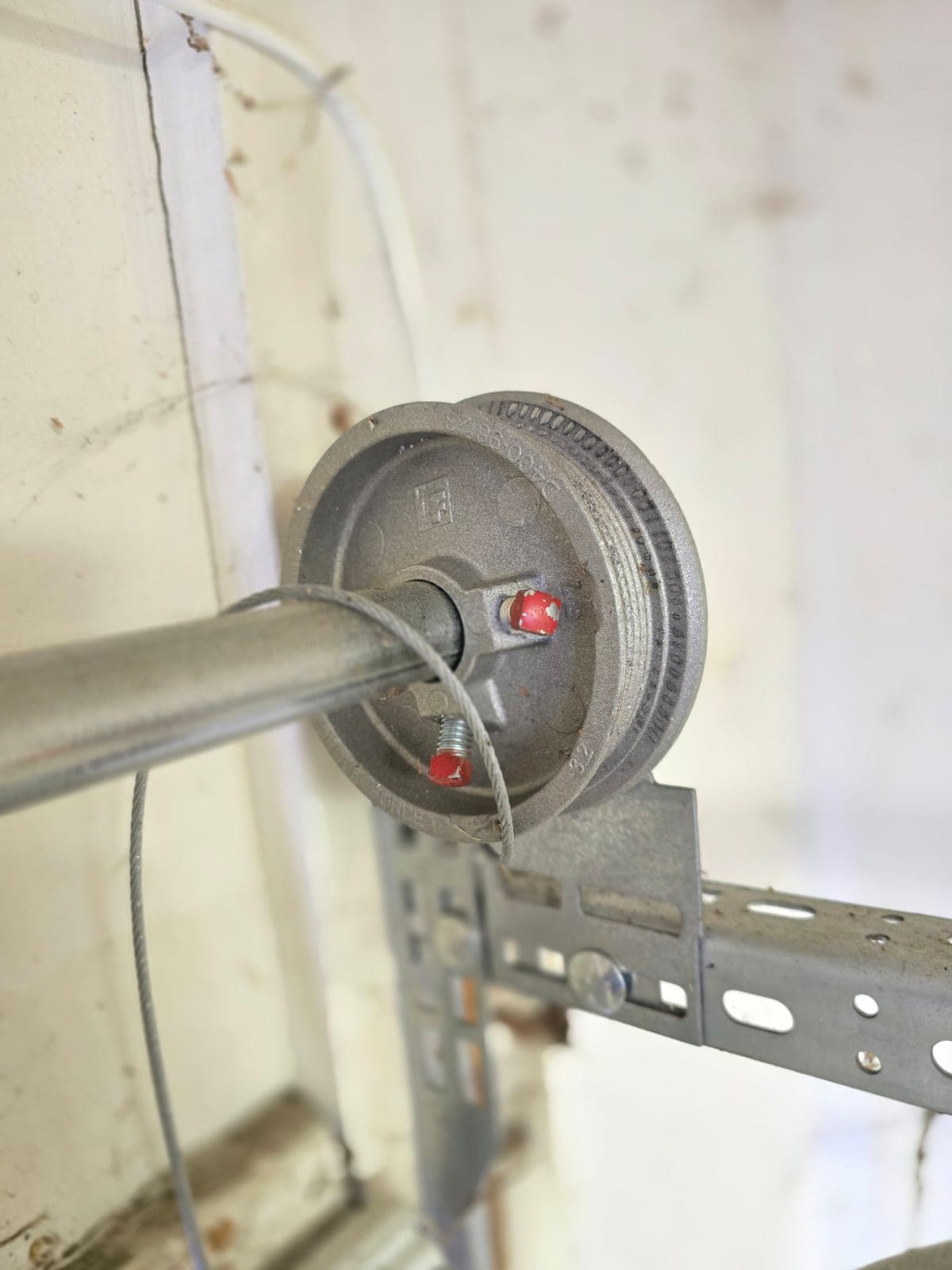
Springs top that list. A broken torsion or extension spring is the most common call we take, and it is almost always a repair. The door has been working fine for ten or fifteen years on that spring, and a new pair, sized to the door's weight, brings it back to balance. We recommend replacing both springs on a two-spring door, since the second is the same age and the same number of cycles in. Cables and rollers follow the same logic. They fray and wear on a schedule and the door around them is untouched.
Openers deserve their own line because they get lumped in with the door. If the door glides when you pull the release and lift it by hand, the door is healthy and the opener is the only open question. Under ten years old and the fix is a gear kit or a board, repair. Older than twelve to fifteen and the repair is the cheap part of a machine that is all the same age. That is the point where opener repair or a full replacement becomes a real conversation, and it still has nothing to do with the door.
When replacement really is the honest answer
Replacement is the right call in three situations.
The panels are failing. Older steel doors in the DMV delaminate, with the skin peeling away from the insulation. Wood doors rot from the bottom edge up, where the Mid-Atlantic humidity sits. When a bottom panel crumbles at the fasteners, the hinges that hold the next panel have nothing to bite into. Past that point, every repair is a patch on a door that is already coming apart.
The frame won't hold the hardware. Track and hinges are bolted to the jamb. If that wood is soft, the fix is carpentry first and then a door that fits the repaired opening. Some of those jobs are better served by replacement, since a new door installed on a repaired frame comes with new track and hardware all at once.
Repairs have started stacking. One spring on a twenty-two-year-old door is a repair. A spring this year, cables last spring, and a bent track section the year before is a pattern. A rough rule: when the repairs on a single door start to add up to about half the price of a new one, stop spending on the old door and put that money into a new one. We will tell you when your door is at that point, and we quote both ways so you see the two numbers next to each other.
Style and timing also count, and they are legitimate reasons. If you are listing the house and the door looks tired, or the room above the garage never warms up and you want an insulated door, replacing it is a reasonable choice even when the old one still works. Our new garage door installation page has the materials, and the installed ranges are wide because the doors are: most good insulated steel doors on a two-car opening run roughly $1,400 to $3,800+, with carriage-house, glass, and custom doors running more.
What the repair side costs, and why it stays low
A single failed part on a sound door is typically $150 to $800+ across the DMV, with sensors, rollers, and hinges at the lower end and springs, cables, and off-track resets in the middle and upper range. Heavy insulated doubles and custom doors cost more because the parts are bigger or made to order. Set that against a four-figure replacement and the reason repair wins most of the time is plain arithmetic. The part-by-part list is in what each common garage door repair costs in the DMV.
What matters more than the range is how the number is set. A tech looks at your actual door, tells you what failed and what else is close, and gives you one flat price you approve before work starts. Nothing gets added to the invoice afterward. A replacement quote from someone who has not looked at the panels is a guess about what you will agree to pay.
A real one from Rockville
A Rockville homeowner, listed on our reviews page as Star K., had us replace the springs on their garage door three years ago. When the motor started giving trouble recently, that earlier job was reason enough to call us again.
A door with three-year-old springs and a failing motor has an opener problem, and an opener problem has a much smaller set of answers. We keep those questions separate on every call. Garage door repair in Rockville covers sixty-year-old single-car doors in Twinbrook and College Gardens as well as 2000s alley-loaded builds in King Farm and Fallsgrove, and on the newer houses it is usually a sensor or a board that fails long before the steel does.
How we make the call on a visit
On a repair call we go through the door before we quote anything. We look at the panels where they meet the hinges, the bottom edge, the jamb, the track, and the springs and cables. If the structure is sound, we tell you which part failed and what it costs to fix. If it isn't, we tell you that too, and show you why. When the cheaper option is the right one, we say so at the door. If you want to see what a visit covers, a proper garage door repair on a sound door includes balance, cables, rollers, safety reversal, and the hardware that has worked loose, so the next failure gets caught while it is cheap.