Garage Door Spring Replacement
GarageWiz handles garage door spring replacement across the DMV. When a torsion or extension spring snaps, your door becomes too heavy to lift safely. And a DIY swap under tension is genuinely dangerous. GarageWiz stocks the right springs on every van, so a certified tech can match, replace, and re-balance your door the same day. Most people phone this in as garage door spring repair, which is what we answer to, though the work itself is always a replacement. Snapped springs are the most common garage door repair we run across the DMV, which is why every van carries a full spring inventory.
Signs you need this
- A loud “bang” from the garage and a door that won’t open
- A visible gap or separation in the spring coil
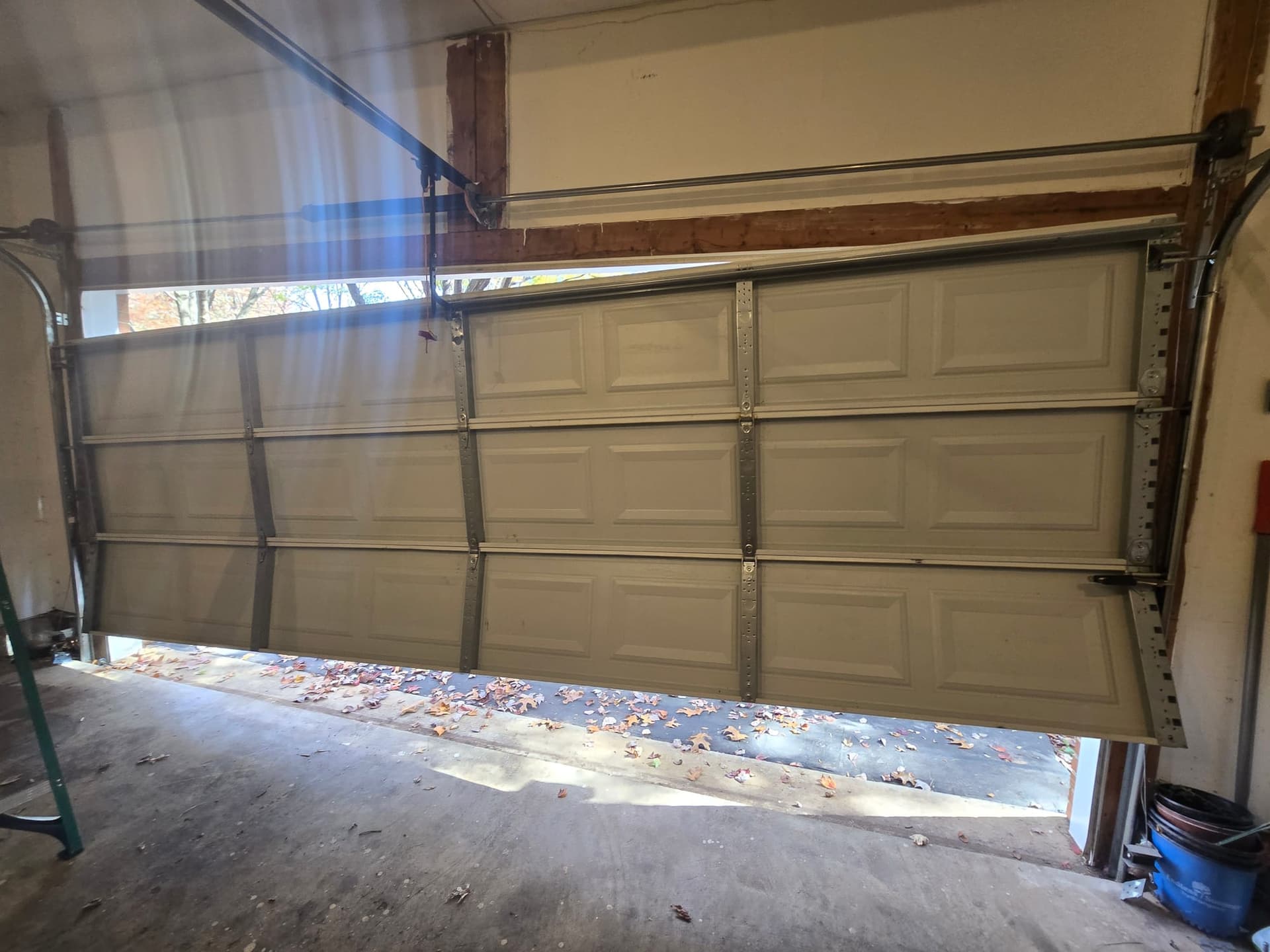
- The door rises a foot then stops, or feels extremely heavy
- The opener strains, reverses, or only opens halfway
- The door slams down faster than usual
Our process
You call
Tell us the symptoms. We’ll confirm it’s a spring and book a same-day window.
We measure & quote
On-site, the tech measures the spring and gives you one flat, upfront price.
We replace & balance
New springs installed under controlled tension, then the door is re-balanced.
We test & warranty
We cycle the door, check safety, and back the work in writing.
What’s included
- Matched torsion or extension springs rated for your door
- New center bearing & end bearings as needed
- Full door balance and travel re-set
- Safety inspection of cables, rollers, and sensors
- Warranty-backed parts and labor
No hidden fees. You’ll see one flat price before any work begins.
What affects the price
Spring pricing comes down to four things.
The weight of your door, because a heavier insulated or double door…
The weight of your door, because a heavier insulated or double door needs thicker wire and a longer spring. Whether you have a one-spring or two-spring system. The cycle rating you pick, since high-cycle springs cost more up front and last several times longer. And whether you need us at nine at night or on a Sunday. We measure the spring on site, quote one flat price covering parts, labor, and the re-balance, and you approve it before any tools come out.
5-star service, every visit
Garage door spring repair vs replacement
People search for garage door spring repair, and it is worth saying plainly what that turns out to mean: a broken spring is not repaired, it is replaced. There is no weld, no re-wind and no adjustment that puts a failed spring back into safe service.
Replaced, never repaired
The torsion or extension spring itself, once it has snapped or dropped below the tension it was wound to.
Both springs on a two-spring door, so the pair lifts evenly again.
Repaired on the same visit
Center and end bearings, which wear alongside the spring and are the usual source of a grinding noise.
Cables and drums, re-seated and re-tensioned where the cable itself is sound.
Door balance and opener travel, re-set once the new springs are on.
Why spring steel cannot be mended
A spring carries the door by storing energy along its whole length, which leaves it nothing in reserve. Every cycle puts the wire through a load-and-release that does a little invisible damage, so the break that finally shows up is the end of a long process rather than a one-off accident. That is why a weld does not hold: heating the wire changes the temper of the steel either side of the joint, and the mend becomes the weakest point on the one part carrying the whole door. Adding winding turns to a tired spring fails from the other direction, buying back a little lift by working the remaining steel harder on a spring already at the end of its rated life.
How to tell a garage door spring is broken
Most people don't see the spring go. They hear it. A torsion spring failing makes one flat bang, loud enough that homeowners call it a gunshot or assume a shelf collapsed in the garage. Then everything seems fine until the next time somebody presses the remote.
Four things confirm it. Look at the steel bar above the door: a snapped torsion spring shows a clean gap of an inch or two in the coil, like a Slinky with a piece missing.
- The door feels far heavier than usual if you lift it by hand.
- The opener strains, raises the door a few inches, then quits or reverses.
- Or the door goes up crooked, one side leading the other.
If any of those match, stop pressing the button. Every cycle after a spring breaks puts the door's full weight on the opener and the lift cables, which is how a spring job turns into a spring, cable, and opener job.
Torsion or extension, and why it changes the job
Two systems, two different repairs. The difference matters for the visit.
Torsion springs
Torsion springs mount on a shaft above the door opening and wind up as the door comes down.
A torsion spring has a specific wire size, inside diameter, and length, and the wrong combination either fails early or refuses to balance the door, so we measure yours on site rather than guessing from a photo.
Extension springs
Extension springs run along the horizontal tracks on either side and stretch instead.
Extension springs are rated by the weight they lift and are usually quicker to swap, though on an older door we'll often suggest running safety cables through them if they aren't there already, so a break can't throw steel across the garage.
Standing in your garage and looking up tells you which one you have.
Why both springs get replaced together
On a two-spring door, the second spring is not a spare. Both went on the same day, have taken the same number of cycles, and carry the same metal fatigue. When one lets go, the other is usually weeks or months behind it.
Doing only the broken one means a second call-out, a second trip charge
Doing only the broken one means a second call-out, a second trip charge, and a door running slightly out of balance in the meantime, because a new spring and a tired one no longer pull with the same force. We'll replace a single spring if you ask, and we'll tell you plainly what we expect to happen next. Most people do both once they've heard the arithmetic.
What a cycle rating means, and which one you need
Springs are rated in cycles, not years. One cycle is one full open plus one full close. A standard residential torsion spring is typically rated around 10,000 cycles. High-cycle springs are wound from heavier wire and typically run 25,000 or more.
Translate that with your own habits
Translate that with your own habits. A household opening the door twice a day uses about 730 cycles a year, so a standard spring lasts well over a decade. A family with two drivers, a teenager, and a garage that doubles as the front door can run six or eight cycles a day and burn through the same spring in three or four years. Heavy insulated doors and wide double doors work the spring harder on every cycle regardless of how often it runs.
If your door is how the family actually enters the house, the high-cycle upgrade tends to pay for itself the first time you don't have to make this call again.
Garage Door Spring Replacement FAQs
Garage Door Spring Replacement across the DMV
We carry torsion and extension springs on every van, so a snapped spring in any of these communities is usually fixed the day you call. Tap your city for local details.