
Stop using the door. That’s the short answer. With a broken spring, leave the door where it is, don’t run the opener, and don’t try to force it up by hand. The springs carry the door’s full weight, and with one snapped the door is unsafe to move until a tech replaces it. Most repairs are done the same day. Here’s what’s actually happening, what to do in the next five minutes, and why this is the one repair we tell everyone to leave alone.
What the spring actually does
Your garage door weighs between 130 and 350 pounds. The opener doesn’t lift all that weight. The springs do. They counterbalance the door so it feels nearly weightless and the opener just nudges it along. When a spring breaks, that balance vanishes, and suddenly the full weight of the door is hanging on a half-horsepower motor and a couple of thin cables.
That’s why a broken spring rarely stays a broken spring. Run the opener a few more times and you can cook the motor, fray a cable, or pull the door out of its tracks. What starts as one part turns into three. The cheapest version of this repair is the one where you stop immediately.
How to know it’s the spring
A few tell-tale signs point straight at the spring rather than the opener or the track:
- A loud “bang” from the garage. The spring breaking sounds like a firecracker.
- A door that suddenly feels far too heavy to lift by hand.
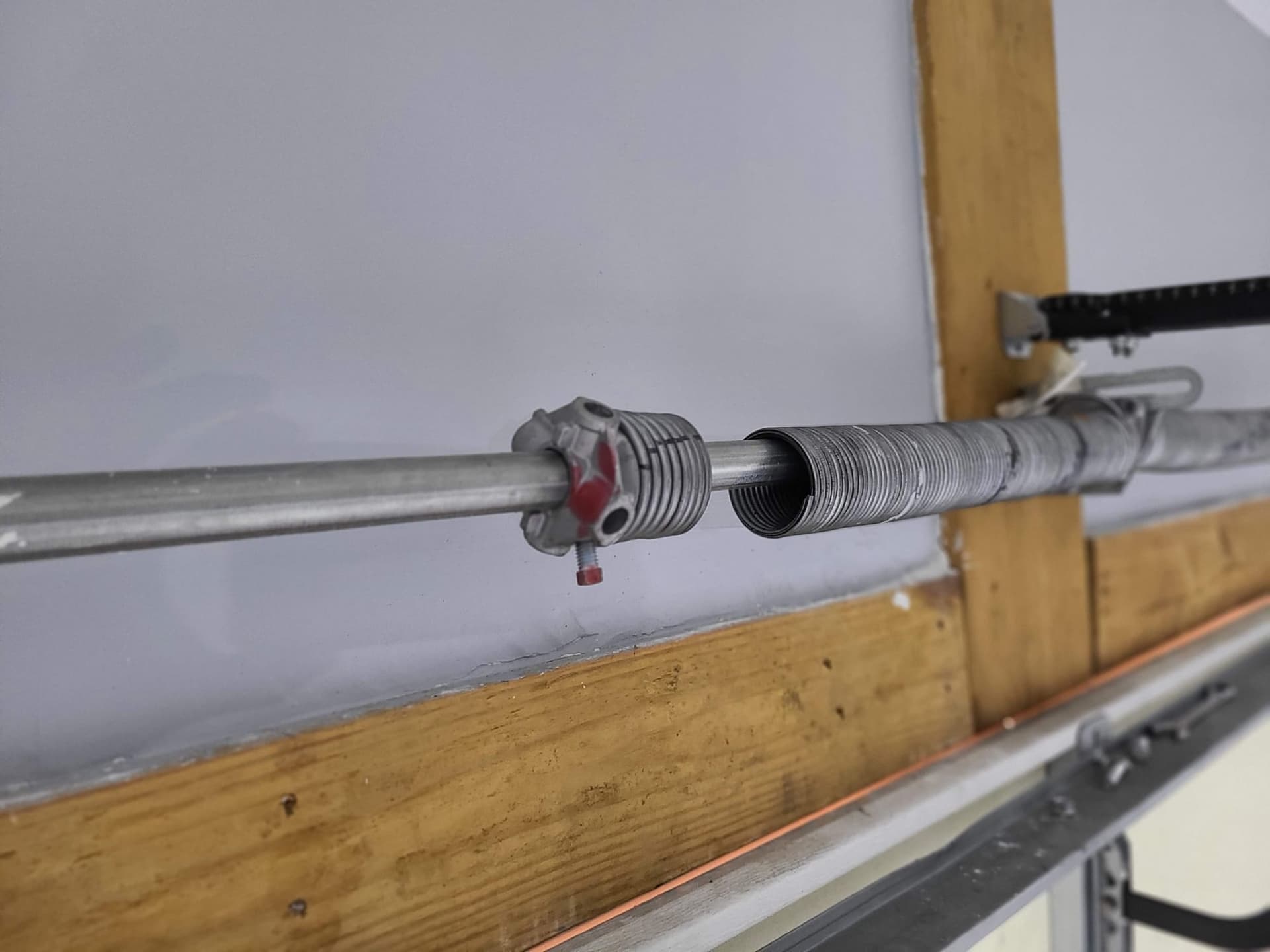
- A visible gap or separation in the coil above the door.
- The opener strains, hums, or only lifts the door a few inches.
If you’re not sure whether you’re looking at a spring problem or something else, this is the quick way to sort it out:
When two causes are possible, a tech confirms it on site before quoting anything. You approve one flat price before any work starts.
What to do in the next five minutes
First, leave the door alone and get everyone clear of the opening, especially kids and pets. Second, pull the red emergency release cord only if the door is already closed. Doing it on a raised door with a broken spring lets the whole weight drop. Third, if a car is trapped inside and you truly need it out, wait for the tech rather than trying to prop the door with anything. We can usually get to you the same day across the DMV.
What not to do
This is the part that matters most. With a broken spring, the safest move is to stop using the door entirely until a tech arrives.
- Don’t try to open it with the opener. You can burn out the motor or snap a cable.
- Don’t force it up by hand. A door with a broken spring can slam down with hundreds of pounds of force.
- Don’t attempt a DIY swap. Springs are wound under extreme tension and are a leading cause of serious garage injuries.
- Don’t prop the door with a ladder, a board, or a jack. None of it holds a door that decides to come down.
Why we don’t recommend the DIY route
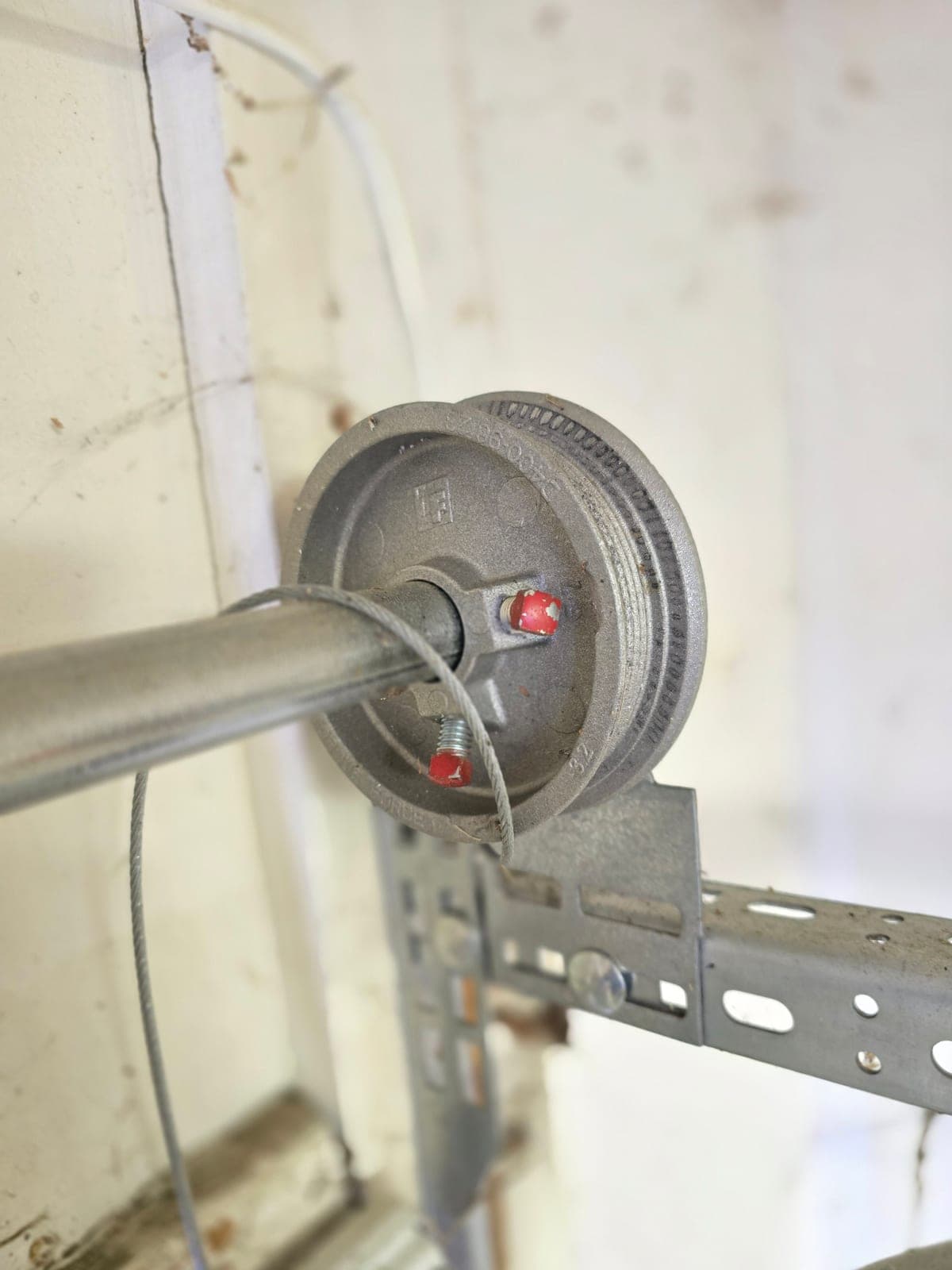
Torsion springs hold an enormous amount of stored energy. Replacing one means relieving and re-applying that tension with winding bars in exactly the right sequence. Get it wrong and the bar becomes a projectile. Pros do this safely every day with the right tools and the matched parts already on the truck. For most homeowners, the cost of a professional swap is far less than an ER visit. The same goes for extension springs, and here's how to tell which type your door has.
The parts problem is the other half of it. Hardware stores sell a handful of generic sizes, and a spring that’s close but not right will lift the door badly and wear out early. Matching wire diameter, inside diameter, length, and wind direction to your door’s actual weight is most of the job. Guessing at it is how people end up paying twice.
What a professional replacement looks like
When we arrive, the tech measures your spring’s wire size, inside diameter, and length to match the exact replacement. Generic springs are a common reason a “fixed” door fails again months later. We replace the spring (both, on a two-spring door), check the cables and bearings, re-balance the door so it floats at the halfway point, and cycle-test it before we leave. Most visits take 60 to 90 minutes.
Balance is the step people don’t see and the one that decides how long the repair lasts. A correctly balanced door stays put when you lift it halfway and let go. If it slides down or drifts up, the springs are fighting the opener, and the opener loses that fight over time. Every spring job should end with that test.
What it costs
Spring replacement across the DMV generally runs $200 to $800 all-in, and heavy or custom doors can run beyond that. Where you land depends on whether the door takes one spring or two, how much it weighs, and whether you go with standard or high-cycle springs. You’ll get one flat price before any work starts. For the full breakdown of what moves the number, see our guide to garage door spring replacement cost.
A real one from Bethesda
A Bethesda homeowner called us on a Sunday morning about a broken garage door spring. We had it fixed within 36 hours of that call, weekend and all. He said afterward that the responsiveness was what stood out, which tells you something about what people expect from this trade. Sunday calls are when a broken spring is most inconvenient and when most shops aren’t picking up.