

The 10-second identification check
Put the door down, stand inside the garage, and look up. That's the whole test.
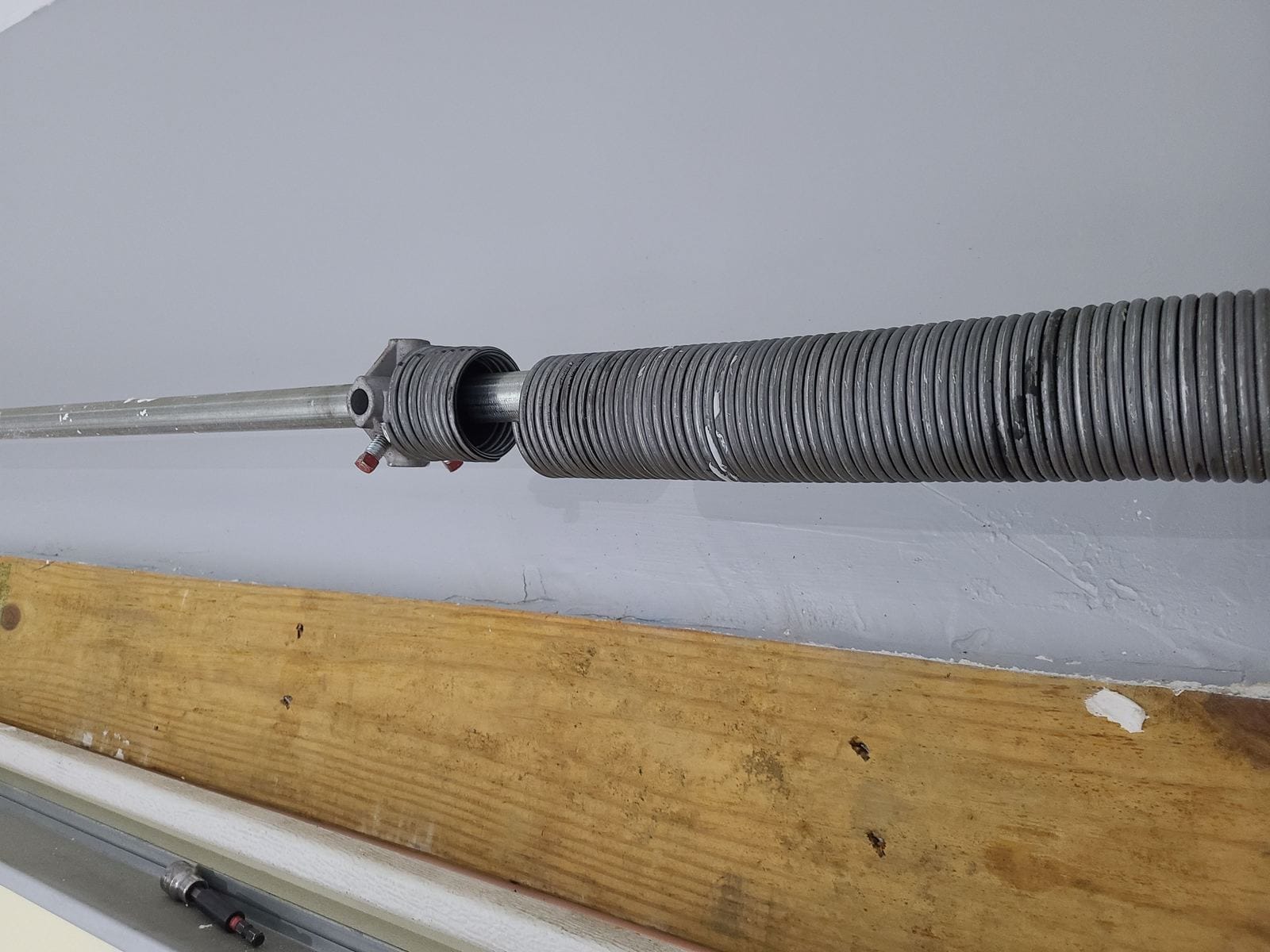
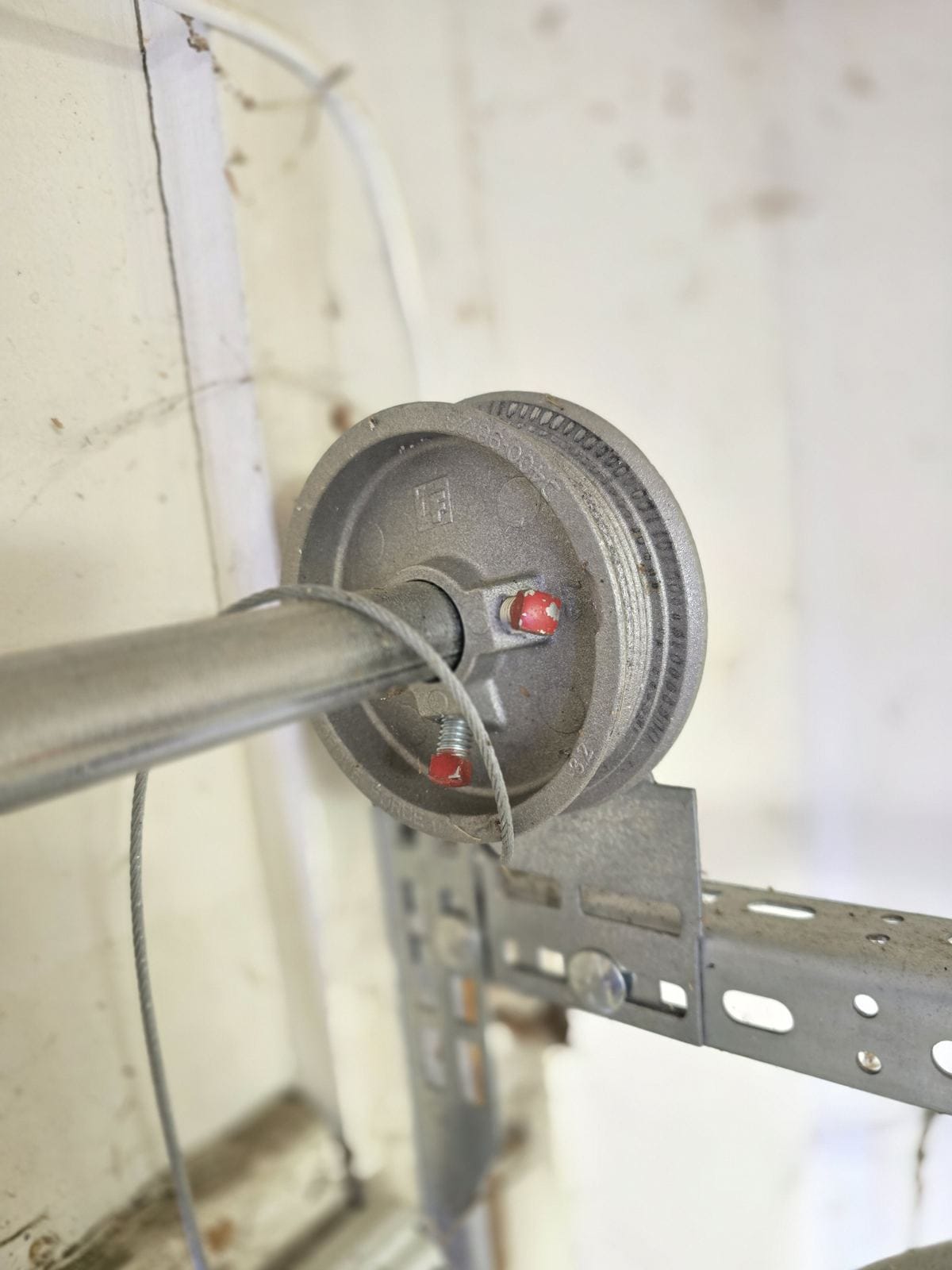
Torsion springs sit on a steel shaft mounted to the header, the wall section directly above the door opening. The spring itself is a tight coil wrapped around that shaft, usually black, sometimes with a colored end cone. One spring on a single-car door, two on most double-car doors, mounted either side of a center bracket. Cables run from the bottom corners of the door up to drums at each end of the shaft.
Extension springs run parallel to the ceiling, alongside the upper horizontal tracks, one per side. They're longer and looser looking, they stretch visibly when the door closes, and they relax when it opens. Most have a safety cable threaded through the middle. If yours doesn't, that's worth fixing on your next service call, and I'll explain why below.
A useful tell if you're unsure: watch the springs while someone cycles the door. Torsion springs twist in place. Extension springs stretch and contract. Nothing else in the assembly does either of those things. Either type is rated in cycles rather than years, so how long yours last depends on how often the door runs.
Why it matters to you
Parts and price differ. Sizing a torsion spring means matching wire diameter, inside diameter, length, and wind direction to your door's actual weight. Sizing an extension pair means matching the spring's rated weight capacity to the door. Different parts, different labor, different number. Here's what spring replacement actually costs across the DMV.
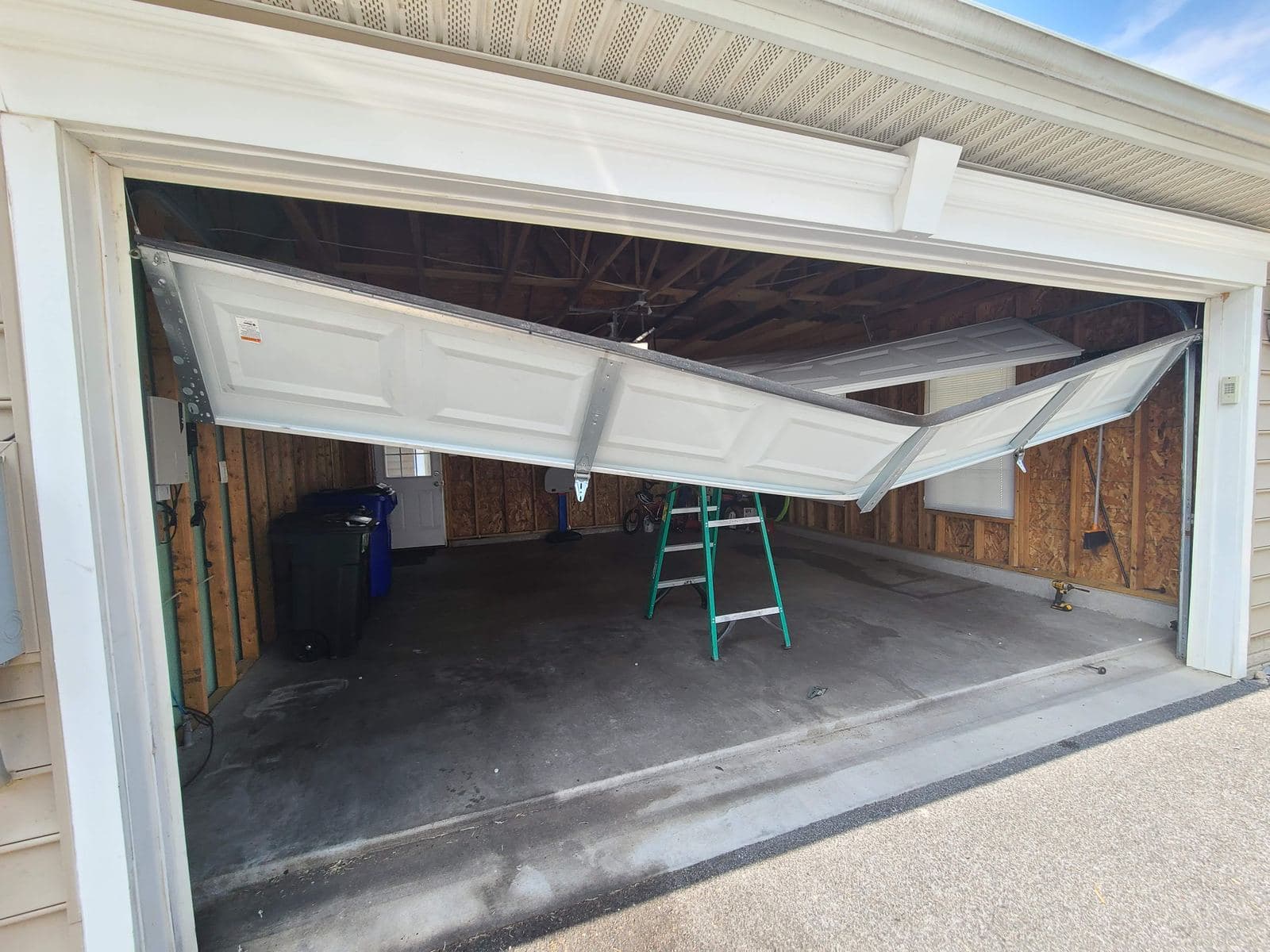
Failure behaves differently. A torsion spring breaks with a bang that people describe as a gunshot in the house, and then the door is simply too heavy to lift. An extension spring lets go and the spring itself can fly, which is exactly what the safety cable is there to prevent. If your extension springs have no safety cables, a broken spring becomes a projectile in a garage where people park cars and kids ride bikes.
Replacement scope differs. With torsion, if one of two springs breaks, the other has run the identical cycle count and is on the same clock. With extension, the pair works in tandem and an uneven pair pulls the door crooked, so we replace both either way.
Torsion vs extension, side by side
*All-in (parts + labor), based on jobs across Montgomery County, DC, and Northern Virginia. Every GarageWiz quote is a flat price you approve before work starts, so there's no hourly meter and nothing new on the invoice.
Can you convert extension to torsion?
Often yes, and on some doors it's worth doing. A conversion swaps the two side springs for a shaft-and-torsion setup above the opening. You get smoother travel, better balance on wide doors, and no exposed stretched spring hanging over your parking spot.
Two things decide whether it's practical. First, headroom: torsion generally wants about 12 inches of clear wall between the top of the door and the ceiling, and plenty of older Kensington and Silver Spring garages simply don't have it. Low-headroom torsion kits exist, but they cost more and the clearance has to be checked in person. Second, the math: a conversion runs above a straight extension replacement, in the range of $450 to $900+ depending on door weight and hardware, so it makes the most sense when the door is heavy, wide, or the springs were already due.
If your extension springs are fine and the door runs quiet, leave them alone. A conversion is something you choose to do, not something the door is asking you for. The same logic applies to the door itself: a spring failure is a repair, and our guide on when to repair or replace a garage door explains where that line sits.
The safety cable question
If you have extension springs, go look for a thin steel cable running through the center of each spring and anchored at both ends. That cable is what keeps a broken spring from leaving its track and traveling across the garage. On older DMV doors we find them missing surprisingly often, either because they were never installed or because someone pulled them during a past repair and didn't put them back.
Adding safety cables is a small job and one of the cheapest pieces of safety hardware on the door. If we're already on site for something else, ask and we'll take care of it while we're there. It's worth checking each year alongside the monthly safety test every homeowner should run.
A real one from Kensington
A Kensington homeowner called us about an Overhead-brand door that had run about five years before one spring broke. He told me straight out that he never knew springs wore out at all, which is the most common thing I hear on spring calls. Nobody thinks about the one part of the door doing all the lifting until it stops.
We looked at what he had and laid out the options with real numbers on each, and he picked the one that made sense for how long he planned to stay in the house. I didn't push him toward the bigger job. His review afterward called out that the options were explained clearly, which is the part I care about. That's what I want every spring call to look like. Find out what's actually on the door, put a real number next to each option, then let the homeowner pick.
Either way, don't do this one yourself
Both spring types store enough energy to seriously injure you, and they're the two repairs I tell every homeowner to leave alone. A wound torsion spring needs proper winding bars and a technique that has no margin for a first attempt. A stretched extension spring under load is holding the door's full weight and will move fast if it's released wrong.
Adjusting a garage door spring is not like changing a light fixture. The failure mode is a hospital visit. If a spring just let go, here's what to do while you wait, and we run same-day spring service across the DMV.