

Why nobody can quote your door over the phone
Two houses on the same street in Bethesda can have doors that price a thousand dollars apart. One is a 1962 uninsulated single-car panel that weighs about as much as a bicycle. The other is a two-car insulated steel door with glass inserts that a tech and a helper have to muscle. Same complaint, same symptom, completely different part.
What moves the number is mostly weight. Springs get sized to the door they are lifting, so a heavier door needs a heavier spring, and heavy springs cost more. A double usually runs two of them plus twice the hardware. Whether the part is on the truck or has to be ordered to size matters almost as much: anything a supplier has to make costs more and takes longer. Then there is age. On a 25-year-old door the part that failed is rarely the only tired part, and a tech who ignores that is setting you up for a second call. Access counts too. A detached garage down a strip of concrete barely wider than a car takes longer to work than a two-car attached bay.
None of that is visible from a phone call. A company quoting you a firm price from the dispatcher’s chair is either padding it or planning to revise it once they see the door.
What each common repair costs
Ranges reflect residential doors across Montgomery County, DC, and Northern Virginia in 2026. Oversized, custom, and carriage-house doors run above these. Every job gets one flat price, quoted on site, approved before any work starts.
The repairs that fill most of our schedule
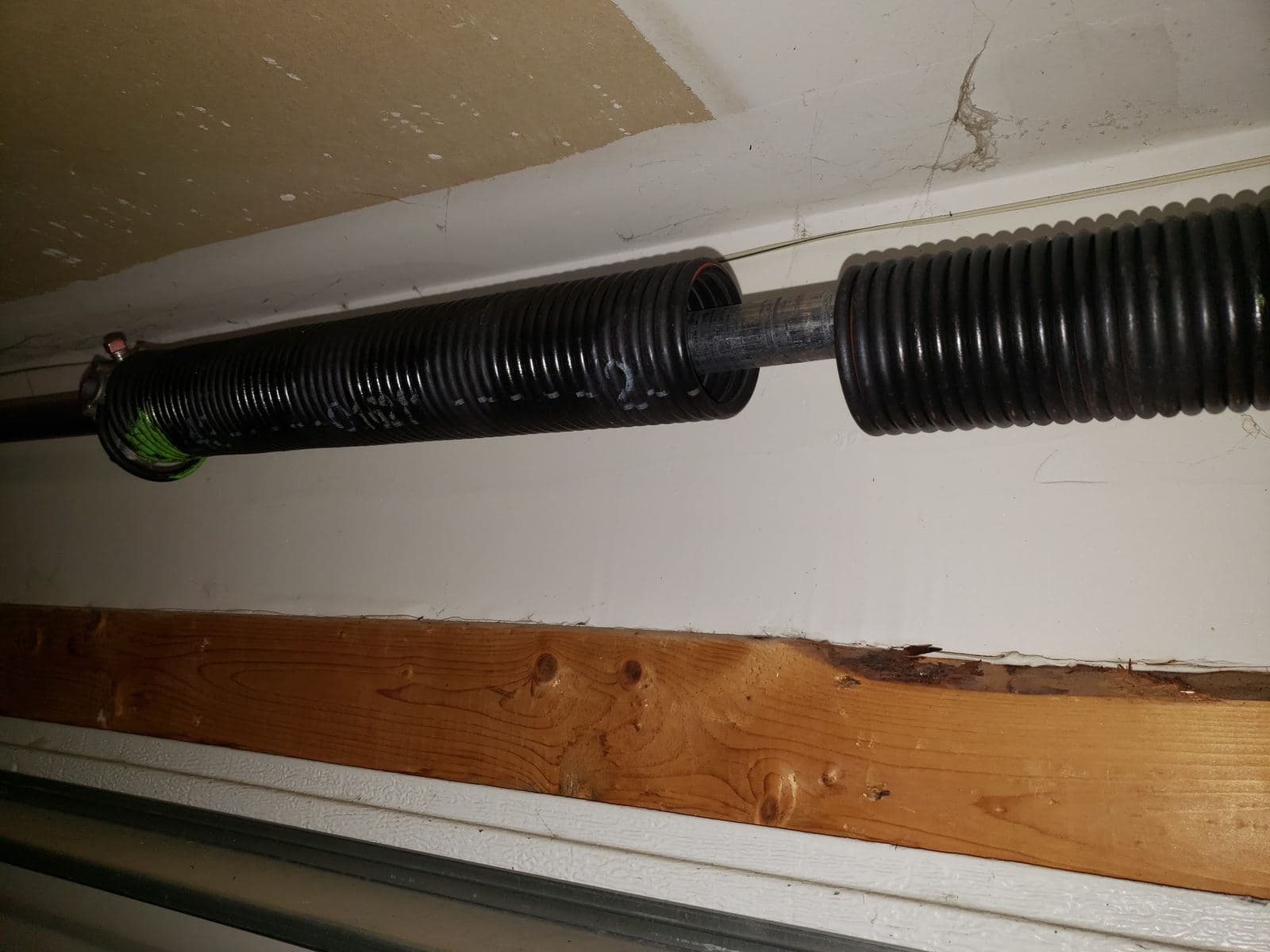
Springs. This is the single most common repair we run, and the one people find most alarming, because the door goes from working to a 200-pound dead weight in one bang. On a double door with two springs, the standard advice is to replace both at once even when only one broke, since the second is the same age and the same number of cycles into its life. Doing them together costs less than two separate visits. A garage door spring replacement on most DMV doors runs $250 to $800, with high-cycle springs at the top of that and worth it on a door that runs six or eight times a day.
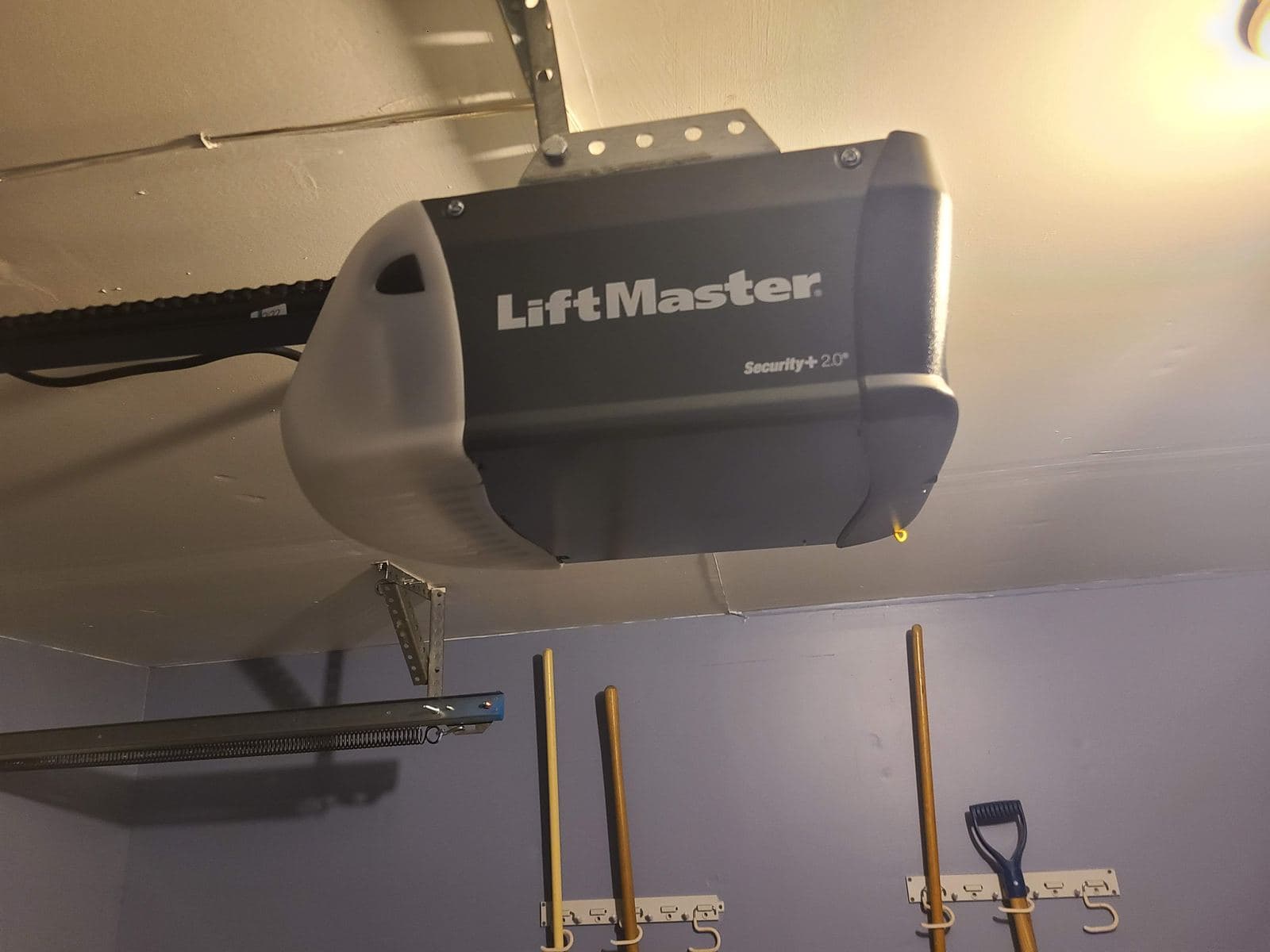
Openers. An opener that hums but does not move the door is usually a stripped drive gear, and on a unit under about ten years old, the gear kit is the sensible fix. Past twelve or fifteen years, you are putting a new part into a machine whose board, capacitor, and rail are all the same age. That is where the math tips toward opener repair versus a full replacement, and the age of the unit decides it more often than the cost of the repair does.
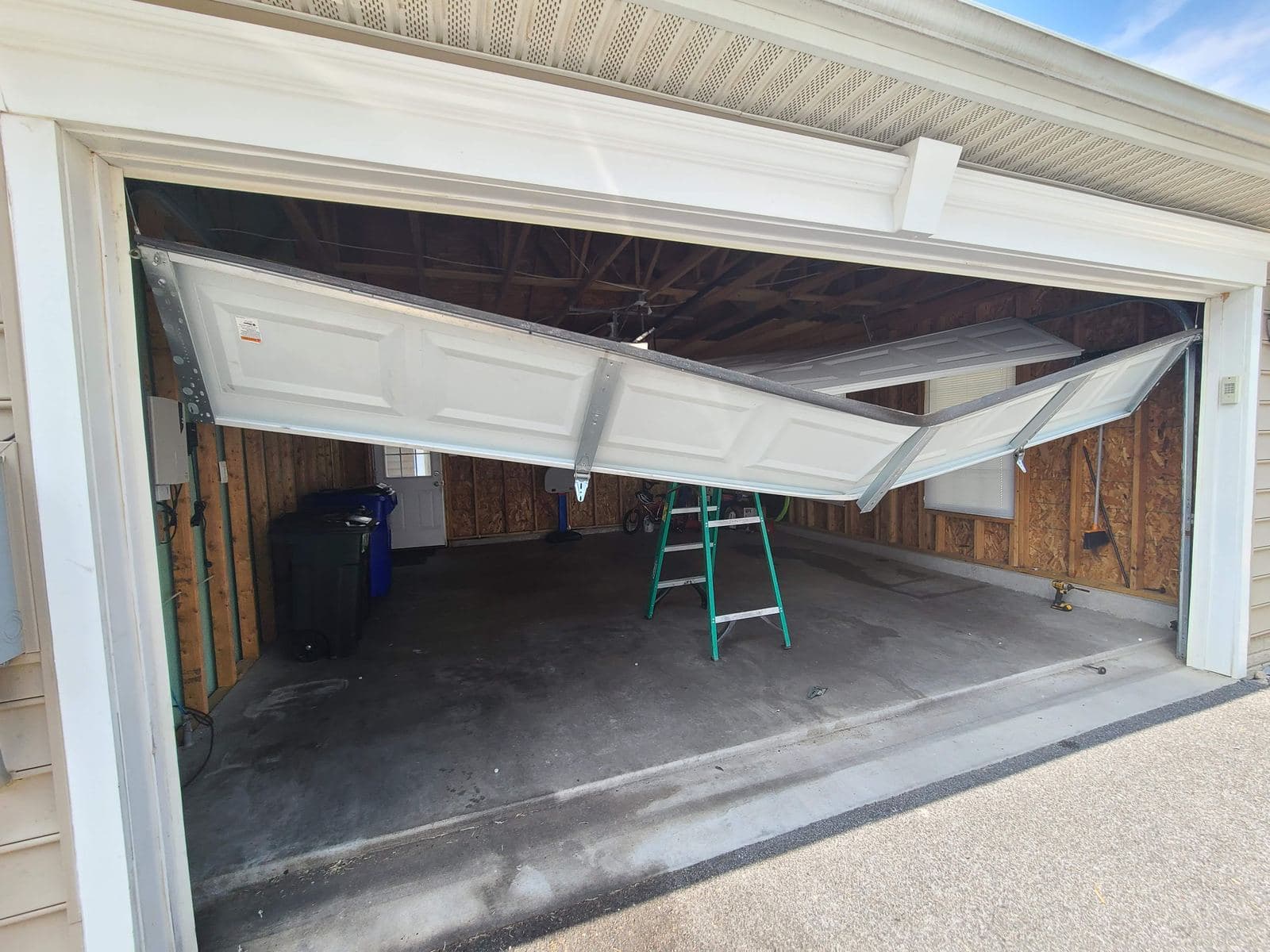
Cables and off-track doors. These start cheap and get expensive fast if the door keeps getting used. A cable off its drum leaves one side low. Run the opener anyway and you bend track, then a panel, then you are pricing a section instead of a cable. Stop using a crooked door.
Everything else we see is cheaper. Sensors, rollers, hinges, and weather seal are the low-hundreds end of the table above, and a fair number of those calls get solved in under an hour.
What a repair visit actually includes
A repair call is not just the failed part. On any visit we balance the door, check the cables and drums, look at the rollers and hinges, test the reversal and the photo eyes, and tighten what has worked loose. Half the value of a service call is the stuff a tech catches while standing there. Sensors that pass today but sit a quarter-inch out of alignment are next winter’s phone call.
You can see the full list of the garage door repair jobs we take most often, and what each one involves once a tech is on site.
Where the quote should come from
Anyone working on your door should follow the same sequence. A tech looks at the actual door, with the actual springs, in the actual opening. He tells you what failed and what else is close to failing. You get one flat price for the work, plus options if there are real options. You approve it, and only then does the work start. The invoice matches the number you approved.
Nobody is running an hourly meter, and nothing gets discovered halfway through that quietly moves the price. If a company cannot hold a number it gave you an hour earlier, the door is not your problem.
A real one from Silver Spring
A Silver Spring homeowner called us after getting an estimate elsewhere that he was not comfortable with. Our tech went through the door on site and showed him how he got to the diagnosis rather than just announcing it. The actual repair came in significantly under that first estimate, and it was finished the same visit. His review said the professionalism was what stuck with him.
That gap between the first estimate and the real number is worth understanding. It is usually not dishonesty. It is a company pricing for the worst thing it might find because nobody diagnosed the door first. Silver Spring makes the point better than most: garage door repair in Silver Spring covers 1920s bungalows with narrow detached garages down a concrete strip and downtown builds with wide insulated doubles, sometimes on the same block. Quote that sight-unseen and you will be wrong in one direction or the other.
Where you can actually save money
Fix it early. A door that has started grinding is telling you something. Grinding costs a service call. Ignoring the grinding until the cable frays costs a service call plus cables plus whatever the door hit on the way down.
Do both springs in one visit. Two trips cost more than one, and the second spring is the same age as the one that broke. This is the most reliable money-saver on the list, and the one people argue with me about most.
Beyond that, the annual maintenance visit does more for the invoice than anything else you can control. Balance, lubrication, and tightened hardware are what let springs reach their rated cycle count instead of dying at half of it. An annual garage door tune-up costs less than any single repair on the table above.
What we will not do
We do not quote your door over the phone, and nothing gets added to the invoice after you have approved a number. The bigger one is that we will not sell you a new door when the old one has ten good years in it. Charles, a Rockville customer, wrote that we walked him through what was worth saving and what was worth replacing based on how much life each part had left. Those conversations take longer than a sales pitch and they are the reason people call us back three years later. If you are weighing the two yourself, here is how we decide garage door repair or replacement on a visit.
That answer changes street to street. What a repair costs in Rockville depends on whether the door is a postwar rambler still running its original single-car panel or an alley garage built in the late 1990s with a smart opener, and the same failed part can be worth fixing on one house and worth replacing on the next.
If the door is stuck right now, leave it where it is and call. Stuck open is the urgent version, because your house is standing open with everything in the garage on display.