
The short answer. Most garage doors that won’t open have one of four things wrong: a dead opener, a blocked or bumped safety sensor, an engaged lock, or a broken spring. The first three you can check yourself in about five minutes and often fix without a tech. The fourth one you should not touch. Start by looking at the springs above the door. If you see a gap in the coil, stop there and call, because nothing else on this list matters until that spring is replaced.
First, one thing not to do
Don’t stand there pressing the button. If the door is jammed, locked, or hanging on a broken spring, every press either strains the motor or drags the door further out of line. Openers are half-horsepower motors built to nudge a balanced door, not to lift a stuck one. I have replaced a lot of gear assemblies that were fine until somebody hit the remote fifteen more times.
Same goes for lifting it by hand. If the door feels heavier than a few pounds, put it down.
The nine checks, in the order I’d run them
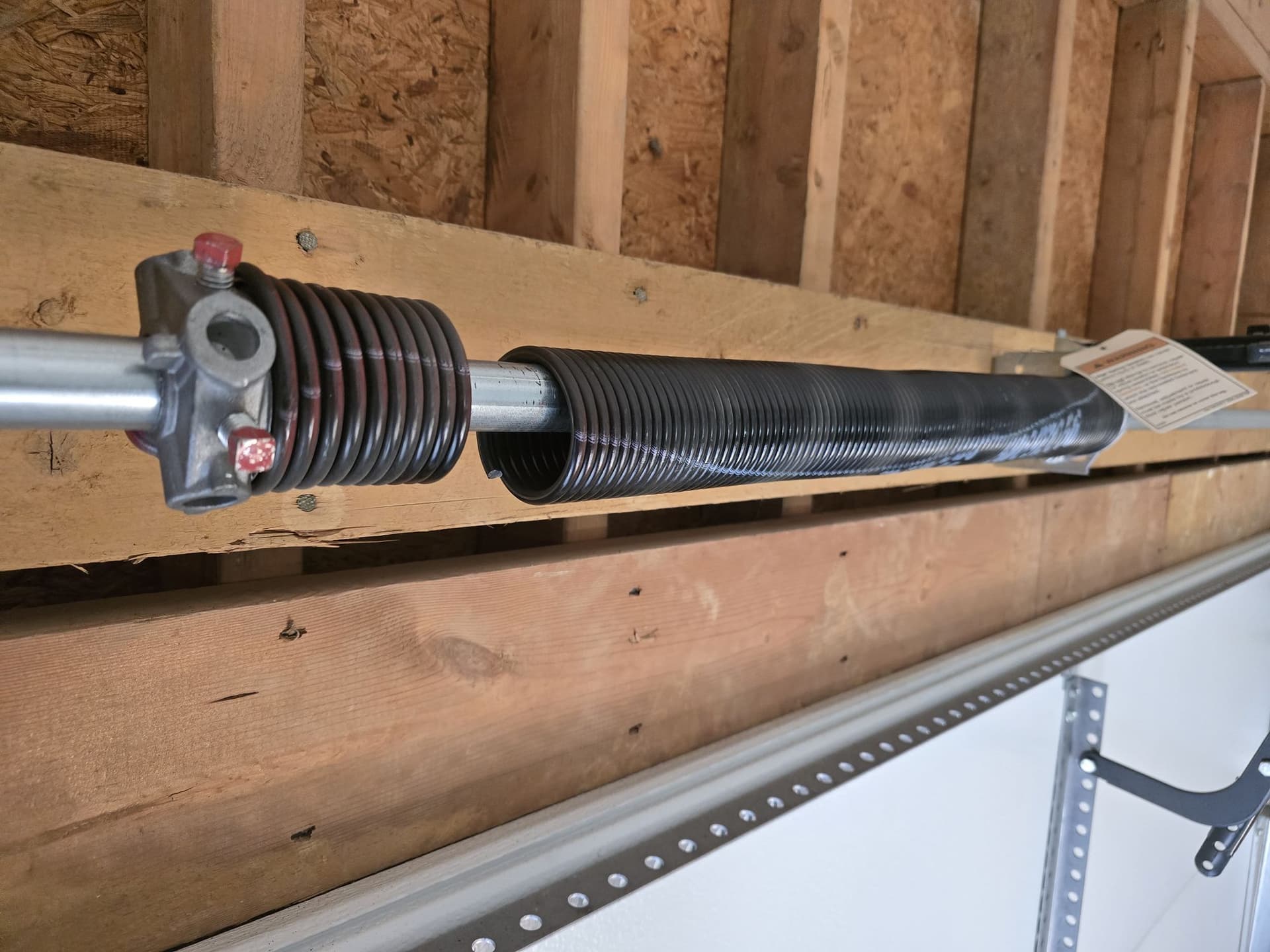
1. Look at the springs. Stand inside with the door closed and look at the shaft above the opening or along the tracks by the ceiling. A torsion spring that has broken shows a clean gap in the coil, usually a couple of inches wide. That gap is your answer. The door now weighs its full 130 to 350 pounds with nothing holding it up. Leave it closed and call. Replacing a broken torsion spring is the one repair on the whole door that nobody should attempt at home.
2. Check that the opener has power. Sounds too simple, and it’s the fix on a real share of calls. Look for a lit LED on the motor unit. If it’s dark, check whether the plug worked loose, whether the outlet is on a GFCI that tripped, and whether the breaker for the garage is still on. Garage outlets share circuits with outdoor plugs in a lot of DMV houses, so a wet outdoor receptacle can knock out the opener with nothing else in the house going dark.
3. Try the wall button, not the remote. This one splits the problem in half. If the wall button runs the door and the remote doesn’t, the door is fine and you have a remote problem, usually a dead battery or programming that got wiped. Built-in car buttons lose their pairing more often than handheld remotes do. If neither works, the trouble is at the opener or the door.
4. Look at the photo eyes. Two small sensors sit about six inches off the floor on either side of the opening. They have to see each other. A bike wheel, a leaf pile, a bag of mulch, or a sensor knocked sideways by a car door will all stop the opener cold. Most units show it: one LED goes out or starts blinking. Wipe both lenses, clear whatever is in the path, and aim them at each other until both lights hold steady. Sun glare through a low winter angle can also blind them for an hour a day, which makes for a maddening intermittent complaint.
5. Check for a lock. Two kinds. Older doors have a manual slide bolt through the track on one or both sides, and somebody may have thrown it without mentioning it. Newer wall consoles have a lock or vacation button that disables the remotes, and it’s easy to hit by accident while dusting. If the opener beeps or the console light flashes when you press the remote, that’s the lock talking.
6. Look at where the trolley sits. That red cord hanging from the rail disconnects the door from the opener for manual use. If it was pulled during a power outage and never reconnected, the motor will run the whole length of the rail with the door sitting still. Reconnect by pulling the cord toward the door until the trolley clicks, or by running the opener until the carriage catches.
7. Scan the tracks and rollers. Walk both sides of the door with a flashlight. You’re looking for a dent in the track, a roller out of its channel, a bolt on the floor, or a bottom edge frozen to the slab. Ice bonding the weather seal to a cold concrete floor is a January regular around here, and the fix is warm water and patience rather than more button.
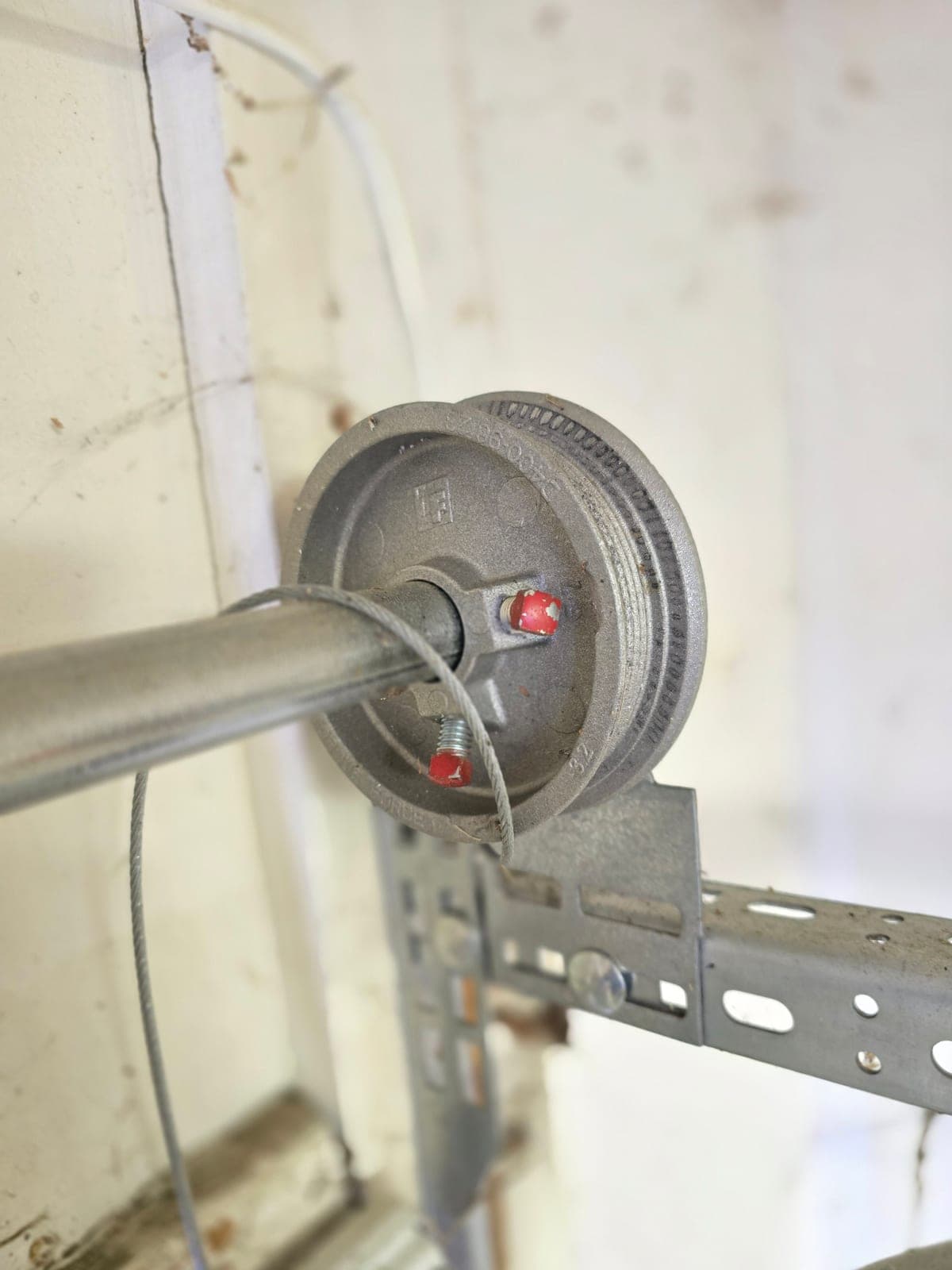
8. Look at the cables. A cable that has come off its drum or gone slack leaves one side of the door lower than the other. A crooked door is a stop-now situation. Forcing it turns a cable job into a bent-panel job, and that’s a much bigger invoice.
9. Listen to what the opener does. Motor hums but nothing moves usually means a stripped gear or a disconnected trolley. Door starts up and reverses right back down means an obstruction, a sensor, or force settings that have drifted. Total silence with the power confirmed points at the logic board or the wiring running to the wall button, and occasionally at a motor that has simply finished.
What each symptom usually means
When two causes are possible, a tech confirms it on site before quoting anything. You approve one flat price before any work starts.
What it costs when a tech has to come out
Diagnostic and small-parts fixes on a door that won’t open, a sensor realignment or a roller put back in its track, typically land in the low hundreds. Cable and off-track work runs higher. Spring and opener repairs on most DMV doors sit in the $200 to $800 range, and heavy, oversized, or custom doors run more than that. A full opener replacement is its own number again.
The range is wide because the doors are. A 1950s single-car door in Twinbrook and a custom double in Potomac are not the same job, and any company that quotes you either one over the phone without seeing the door is guessing. What you should expect instead is a flat price for the actual work, given to you before anything starts, with nothing new appearing on the invoice afterward. That’s how every GarageWiz quote works. Here’s what a garage door repair call actually covers once a tech is on site.
A real one from Rockville
A Rockville homeowner called us with a door that simply wouldn’t open. He had already collected verbal estimates from a couple of other companies before he found us. We got out there inside a day, found the actual cause, fixed it, and the final number came in well under what he’d been quoted elsewhere. His review said he’d go with us from then on.
I bring it up because of the estimates. Verbal quotes on a door nobody has looked at tend to run high, because the company is protecting itself against whatever it might find. Diagnosing first and pricing second usually costs the homeowner less, and it’s why we don’t put a number on a stuck door over the phone. Rockville garages in particular cover about seventy years of hardware, from postwar ramblers on original single-car doors to King Farm alley garages with smart openers, so the same complaint has very different causes street to street.
When to stop checking and call
Call rather than keep troubleshooting if any of these are true: you see a gap in a spring, the door sits crooked, a cable is loose or frayed, the door is stuck open, or you’ve worked the list above and it still won’t run. A door stuck open is the urgent one, because your house is standing open with everything in the garage on display.
If the opener turns out to be the problem rather than the door, that’s a separate conversation about opener repair versus replacement, and the age of the unit usually decides it.
The rest of the time, honestly, check the nine things first. A decent number of the calls we take get solved by the homeowner mid-conversation, and I would rather talk somebody through a sensor alignment for free than charge them for a trip that didn’t need to happen.