

How long each part lasts
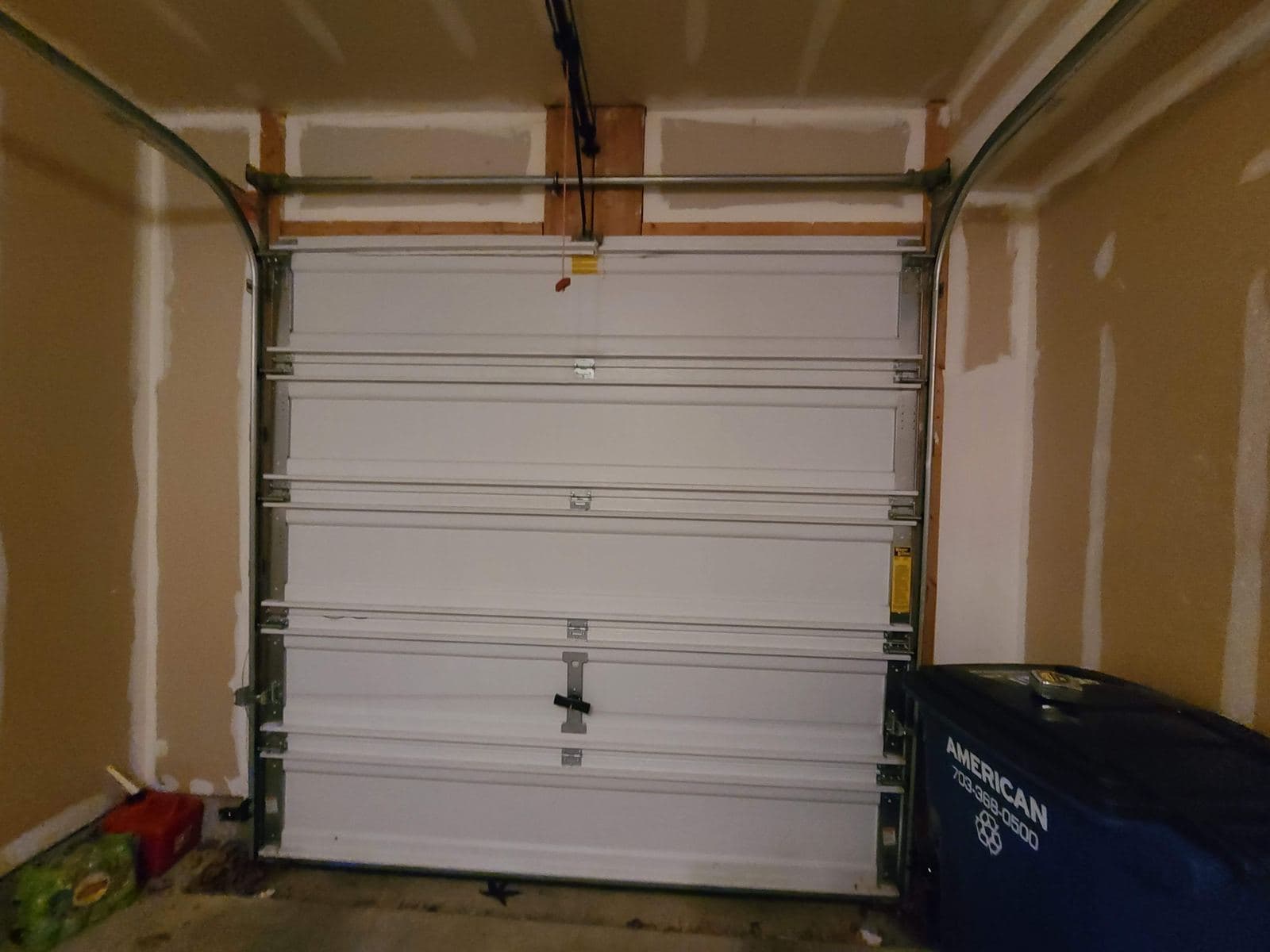
A garage door is one set of panels and about a dozen wear parts, and they don't age together. That is why "how long does a garage door last" has two answers: the door, and everything bolted to it.
Treat the life column as typical, not promised. Springs wear by cycles, so a house with four drivers uses one up about twice as fast as a weekend place does. Ranges are for residential doors across Montgomery County, DC, and Northern Virginia in 2026. Oversized, custom, and carriage-house doors run above them. Every job gets one flat price, quoted on site and approved before any work starts.
What actually ends a door's life
The panels and the frame set the door's lifespan, and nothing else does.
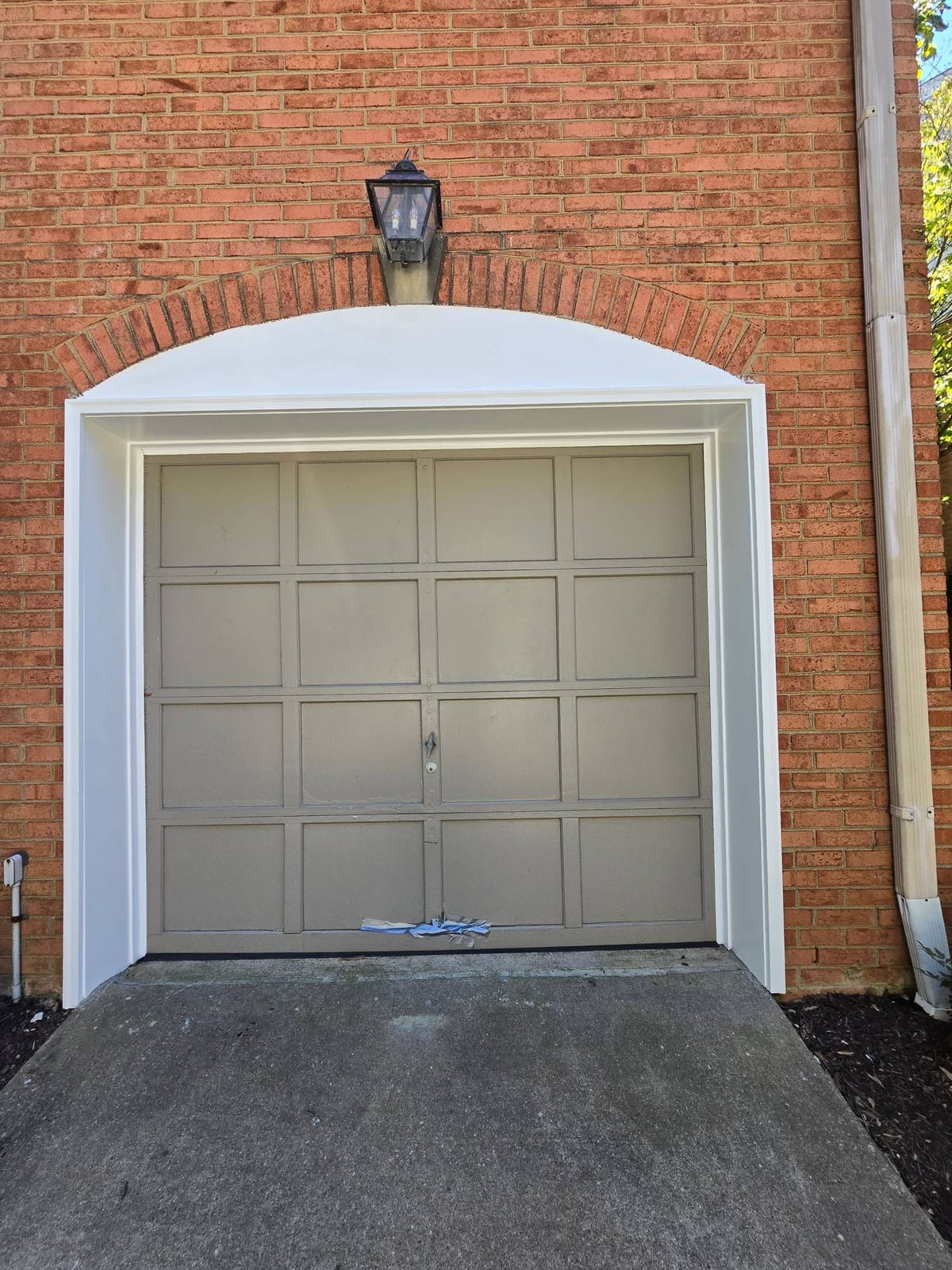
Steel doors fail at the bottom edge first. Water sits there, the skin rusts or the layer bonded to the insulation lets go, and the bottom panel starts to crumble around the fasteners that hold the hinges and the bottom seal. Wood doors rot from the same spot, because Mid-Atlantic humidity never fully leaves a garage floor.
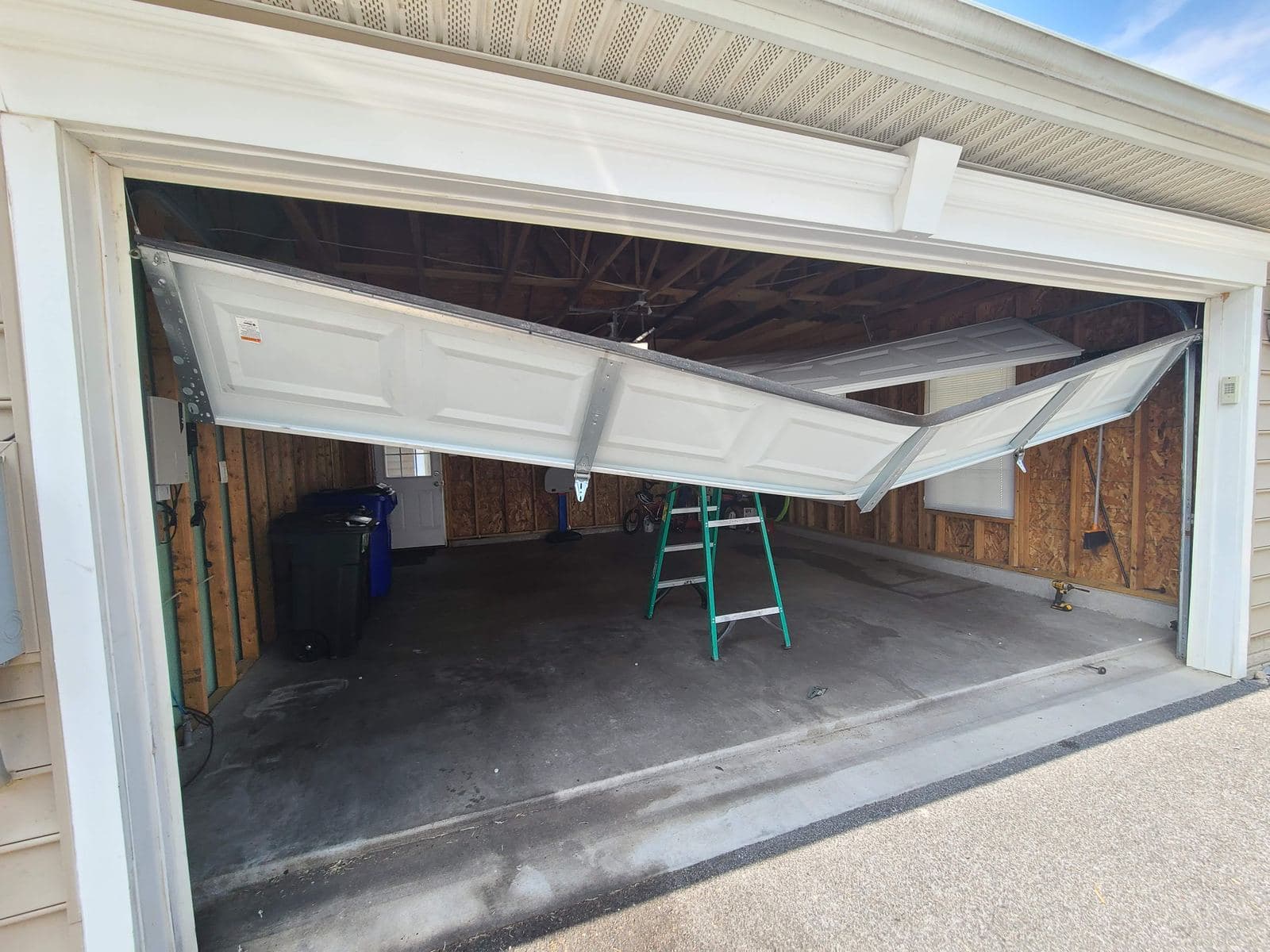
The frame ends doors too. The track and the hinges are bolted to the jamb, and once the wood behind them goes soft, nothing you put on the door will hold. A car backing into a door can also bend a section past straightening, and when a door is bent in more than one place, matching the damaged run costs more than it saves.
Short of that, almost everything on the list above is a repair. If the panels are straight and the jamb is solid, a broken spring is one worn part on a door with years left in it. Whether to repair or replace an aging garage door comes down to those panels and that jamb, and the repair-or-replace table lays out how we call it.
Why DMV doors age the way they do
Humidity does most of the damage. Summers are wet, most garages are not sealed or conditioned, and the bottom edge of the door stays damp for months. Winter adds freeze and thaw, which works water into every joint, and a spring or cable that was close to done tends to go on the first hard cold morning.
The age of the housing stock matters just as much. Rockville homes from the 1950s, the ramblers and split-levels around Twinbrook, Hungerford, and College Gardens, often still run original single-car doors and old openers. King Farm and Fallsgrove went up in the late 1990s and 2000s with rear garages and smart openers, and those doors are now at the age where the first round of replacements shows up.
Weight is the other variable. A heavy insulated double puts more load on every spring and every opener tooth than a light single-car panel does, so the same part lasts fewer years on the heavier door.
Which parts go first, in order
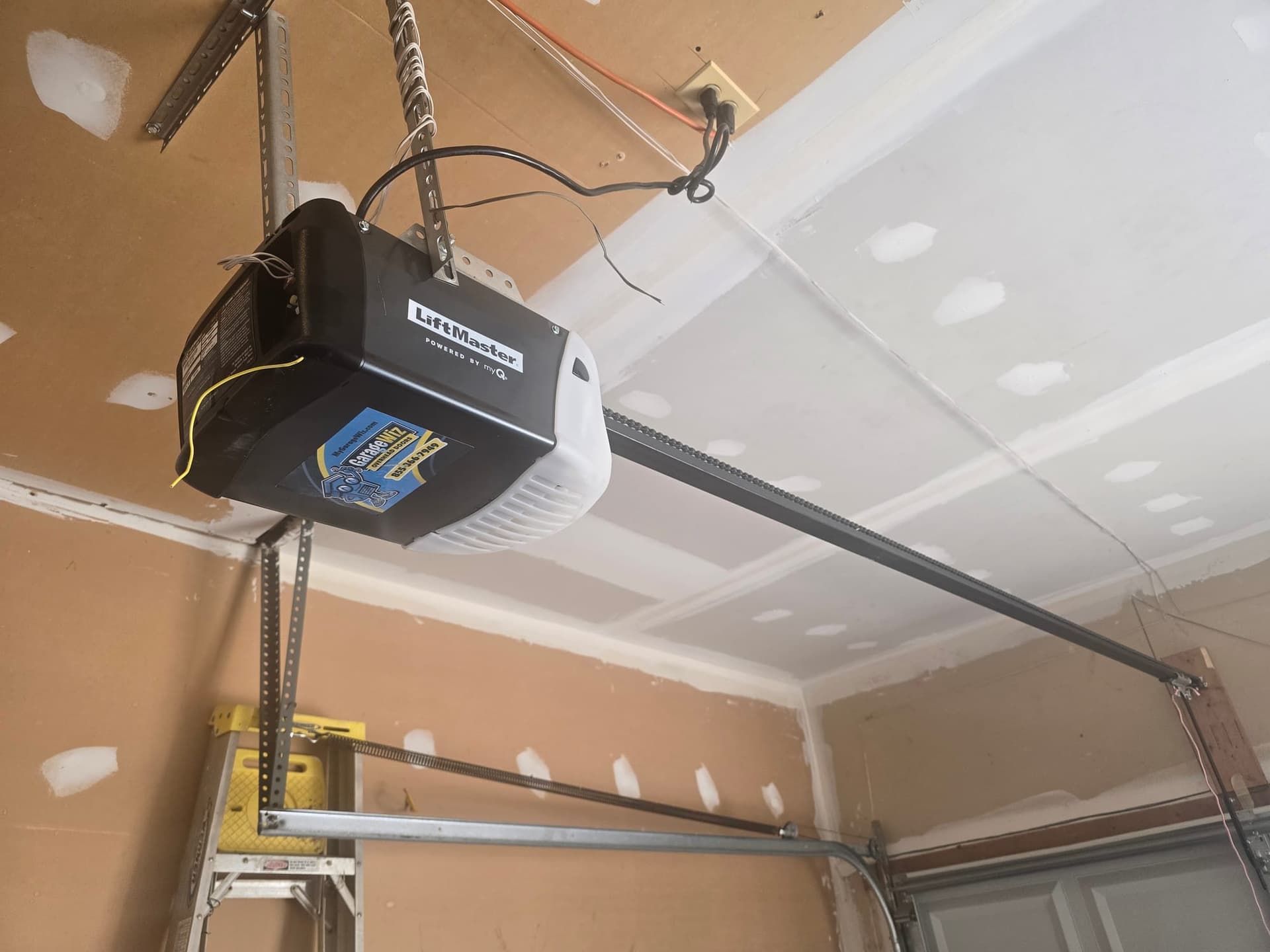
Springs go first on most doors. They are rated in cycles, so a family that opens the door six times a day is on a different clock than a retired couple who open it twice. Weather seals are next, since they are meant to be swapped every few years. Rollers and cables follow, and then the opener. The door itself usually outlives all of them.
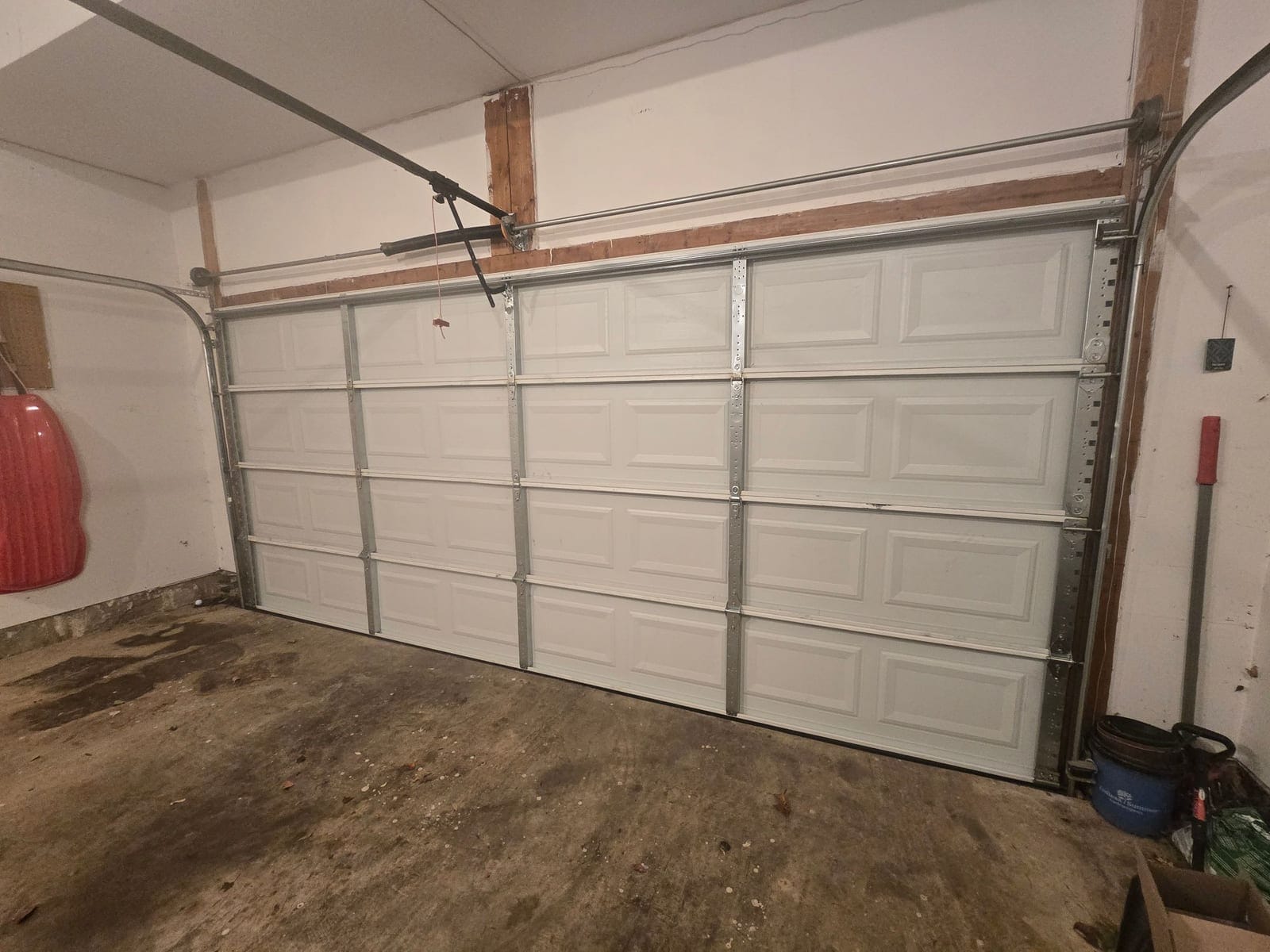
That order explains most of what homeowners call "my door is dying." Usually one part has reached the end of its cycle count and the part next to it is the same age. On a two-spring door that is why we recommend replacing both: the second spring has done the same work, and a second trip costs more than doing both together.
What gets a door to 30
Lubricate the springs, rollers, hinges, and bearings once or twice a year with a proper garage door spray. Run the balance test every few months: with the door closed, pull the release, lift the door halfway by hand, and let go. A balanced door stays roughly where you left it. Replace wear parts when they start to fail instead of running the door until something else breaks, and stop using a door that is crooked or dragging, because that is how a cheap cable job turns into a bent track and a damaged panel.
An annual visit covers the rest. On a visit we check balance, cables, rollers, hinges, the reversal test, and the sensors, and tighten whatever has worked loose. When something does let go on an older door, garage door repair for an aging door should include a look at everything around the failed part, since on a twenty-year-old door the part that broke is rarely the only tired one.
A real one from Rockville
Todd B., a Rockville customer, called us after a neighbor in the Rockville and Potomac area recommended us. His overhead springs had broken, and two of the hinges had cracked. We squeezed him in on short notice and changed out the springs and both hinges on the same visit.
Springs and hinges wear on different clocks, and the hinges are the cheap part that gets overlooked until a crack spreads. A door can need three or four parts in one year and still be a sound door, as long as the panels are straight and the jamb is solid. Doing everything that was due in one trip is also the least expensive way to keep an older door running.
When age does matter, and what it costs
Age starts to count in two places. On the door, once it is past twenty-five years and the panels are failing, put your money into a new one instead of the next repair. On the opener, past twelve to fifteen years, a repair is a new part in a machine whose board and motor are all the same age, and replacement becomes a real conversation.
A new insulated steel door installed on a typical two-car opening usually runs $1,400 to $3,800+, and wood, glass, and carriage-house doors run well above that. Opener replacement is typically $500 to $1,200+ installed, and a spring replacement $200 to $800+. A tech who has looked at your actual door gives you one flat price, you approve it before any work starts, and the invoice matches it.