
Cold almost never kills an opener on its own. What it does is stiffen the old grease in the rollers and hinges, shrink the track fittings a fraction, bond the rubber bottom seal to a cold slab, and pull a little strength out of springs that were already tired. All of that extra drag arrives on the same morning, and the motor quits because it is being asked to lift more door than it was set up for. Most of these calls end in fresh lubricant or a seal chipped free of the concrete, and a fair number end in a spring adjustment. A dead opener is further down the list than most people assume.
What the cold is actually doing
A garage door in January is a heavier machine than the same door in July. Grease that has been sitting in the roller bearings for six years thickens as the temperature drops, so every roller now needs a push to start turning. Steel contracts, which tightens the clearance between the roller stem and the track. The astragal along the bottom of the door gets brittle, and if there was any snowmelt on the slab overnight, it is now glued down.
Springs join in as well. Torsion springs lose a small amount of lifting force in deep cold, and on a spring that has already run most of its cycle life, small is enough to matter. The opener has probably been quietly covering for that spring since October. Add the drag from everything else and the force limit trips, which is the opener protecting itself rather than failing.
Not everything that goes wrong in winter has to do with weight. A remote battery left overnight in a cold car reads low, the photo eye lenses in an unheated garage collect frost and condensation, and a GFCI on an exterior wall trips more often in January than in any other month. At 6am in the dark, every one of those looks exactly like a broken opener.
What your door is telling you on a cold morning
Anything on this table that turns into a tech visit gets a flat price quoted and approved before any work starts.
The five-minute check before you call
Start by taking your thumb off the button. Repeated attempts against a stuck door are how a working opener becomes a burned-out one, and it takes surprisingly few tries on a cold morning.
Pull the red release cord and lift the door by hand. If it comes up smoothly and holds where you leave it, the door is fine and the problem lives in the opener or the power. If it barely moves, or it slams back down when you let go, put it down and leave it. That is a spring or a frozen seal, and the opener was never the issue.
For a seal stuck to the slab, work along the bottom edge with a plastic scraper or the edge of a putty knife, or warm it with a hair dryer on low. Skip the hot water. It runs under the seal, refreezes in about ten minutes, and you get to do the whole thing again with more ice than you started with.
Last, look at the photo eyes. Both should show a steady light. A blinking eye means they are misaligned, and a foggy lens means the sensor cannot see through it. A dry rag fixes more winter no-close calls than any part we carry.
About that force dial
Most openers have adjustable force and travel limits, and a small increase does compensate for normal winter stiffness. It is a legitimate adjustment.
What worries me is when someone has run it to the stop. At that point the opener will muscle through anything, including a person or a car bumper, because the force limit is the safety system that decides when to stop pushing. Cranking it to the top does not make the door any lighter. It just hides the weight and switches off the one system that was watching out for you. If you need max force to get through a January morning, the door needs looking at, and that is garage door opener repair territory rather than a dial setting.
Lubricant matters more in January than in July
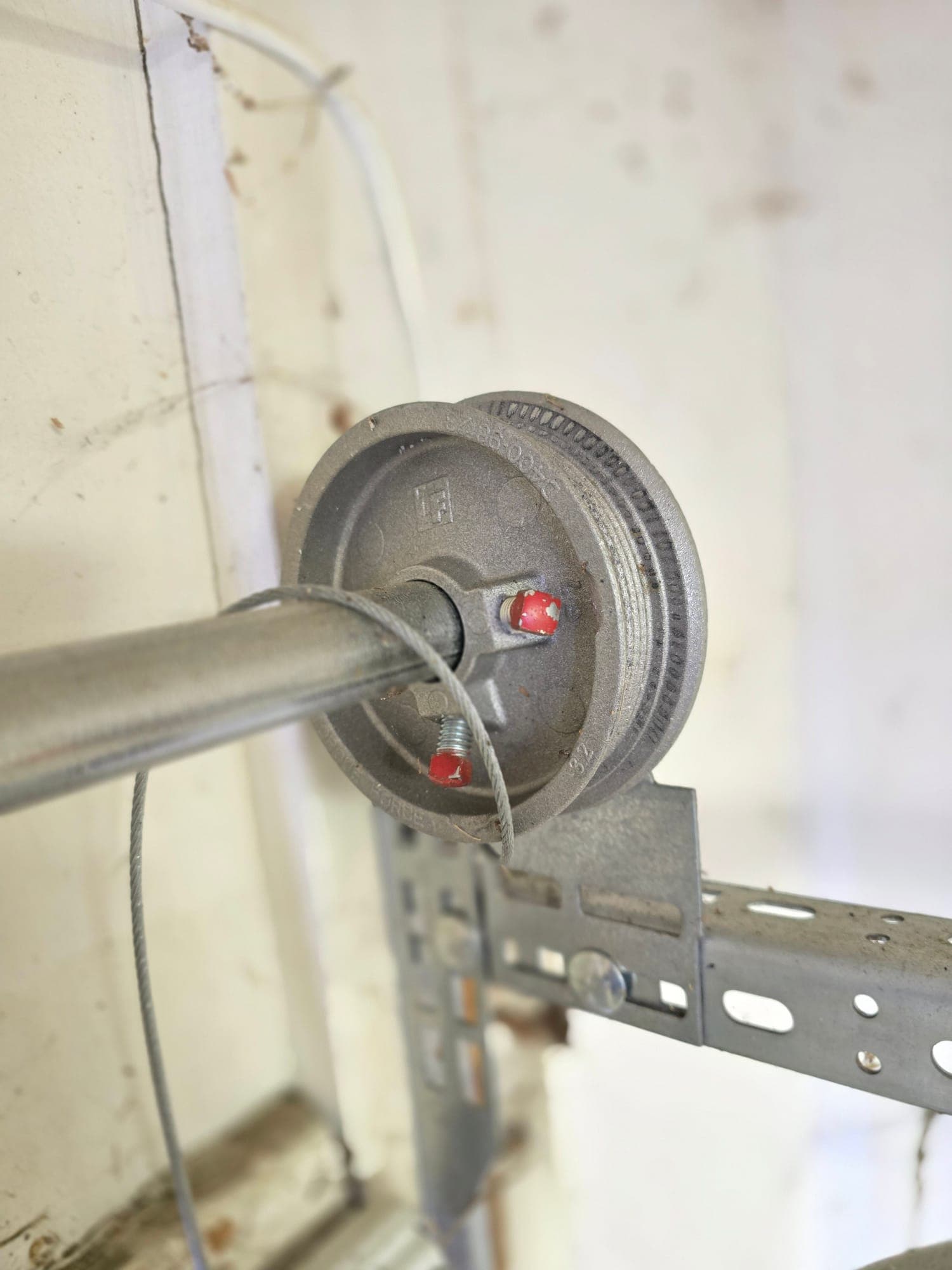
Use a garage-door silicone spray or a white lithium grease, both of which stay flexible when it is cold. Hit the roller stems and bearings, the hinge pivots, the springs along their length, and the bearing plates at each end of the torsion shaft. Wipe the tracks clean with a rag and leave them dry, since grease on a track collects grit and turns into sandpaper for the rollers.
WD-40 is the one to avoid. It is a solvent and a water displacer, so it strips whatever lubricant was left in the bearing and leaves the part running dry a week later. Plenty of the January calls we get trace back to a well-meant can of it the previous spring.
Some openers handle cold better than others
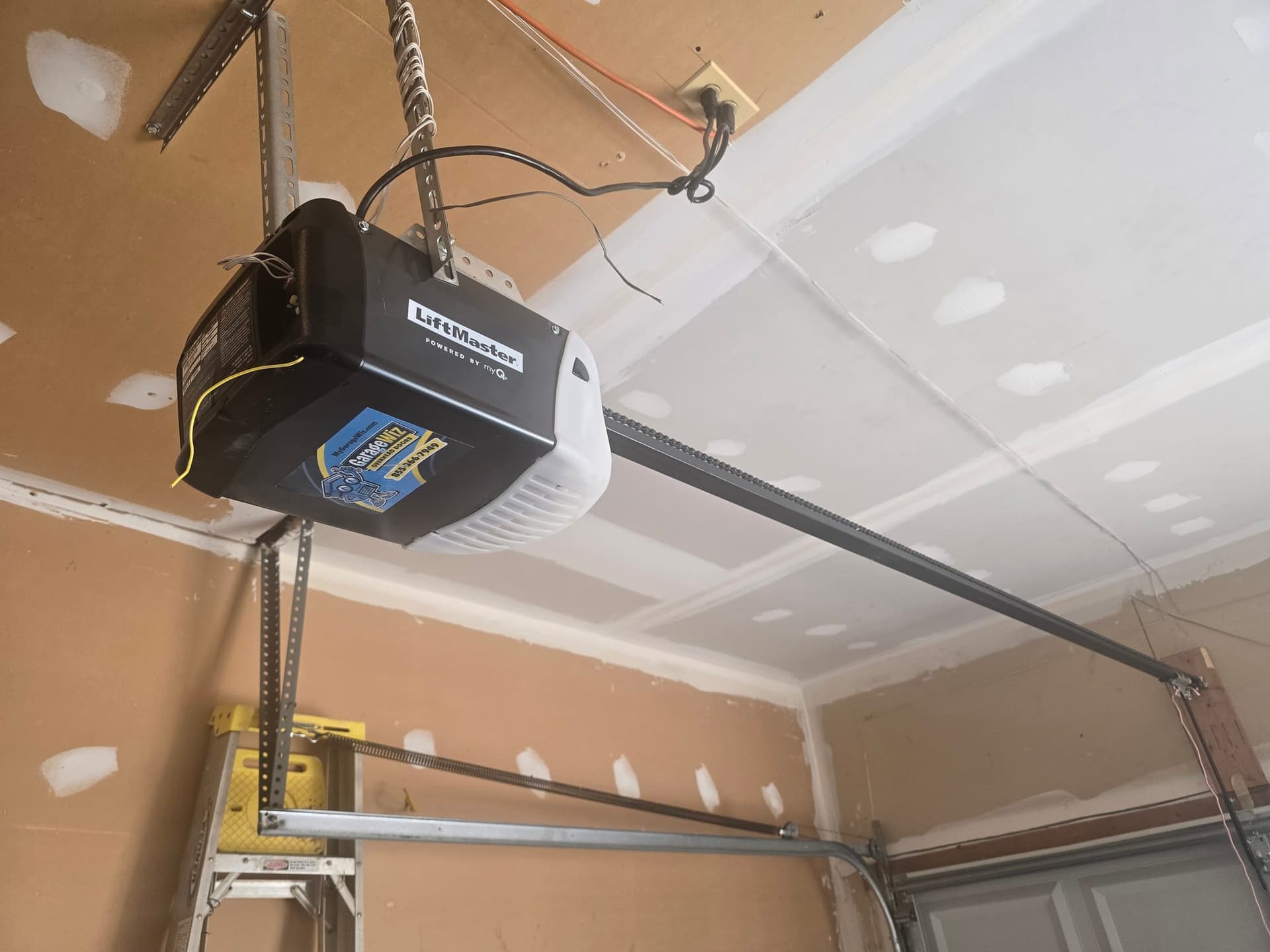
Screw drive units are the most temperature sensitive of the three, because the grease sits right on the screw where the load is. If you have a screw drive in an unheated garage, the annual re-grease with a low-temperature product is not optional. Belt drives run quietly but the rubber does stiffen slightly, which shows up as a slower first cycle of the day. Chain drives are the least fussy in the cold and the loudest the rest of the year.
Drive type matters less than motor type, though. A modern DC opener with soft start ramps up instead of hitting the door with full torque, and it deals with winter drag far better than a twenty-year-old AC unit does. That is worth knowing if you are on the fence about replacing an opener that has been marginal for two winters running.
What this costs
Winter opener calls land across a wide range because the causes do. A service visit that ends in lubrication, an alignment, a chain tension adjustment, or a limit reset sits at the low end of our price list. Spring and roller work on a standard door generally runs somewhere between $200 and $800, with heavy insulated, oversized, and three-bay doors running more. A full opener replacement with a modern DC unit, new rail, and remotes usually falls between $450 and $900+, and premium models with battery backup and camera go above that.
You get a flat price for the work before anything starts, and you are free to say no to it.
A freezing Saturday morning in Clarksville
One of our Clarksville customers, listed on our reviews page as Dr. A., called on a weekend morning with the door down and the temperature well below freezing. We had a tech there inside an hour and the door was working again before he left. His note afterward said it plainly: “Johnathan, came to help our broken garage door within one hour (from calling) on a freezing morning over weekend, and he took care of the problem efficiently.”
I bring that one up because of where it happened. Clarksville homes out through River Hill and Pointers Run tend to be 1990s and 2000s builds with three-bay garages and heavy insulated doors, and when one of those goes down on a cold weekend there is usually no second way out and nowhere convenient to leave a car. The extra weight is also why the cold hits harder out there. A door that heavy has nothing spare in the system, so the first properly cold day of the season finds whatever was already worn.
Get ahead of it in the fall
Almost every winter no-start we see was avoidable in October. Clean tracks, fresh cold-rated lubricant, tight hardware, a balance check, and a fresh bottom seal before the first freeze covers most of it. If you want the order I run it in, the ten-minute tune-up checklist is the same routine our techs follow.
The one thing worth acting on rather than watching is a heavy door. If it does not hold its position when you lift it by hand, the springs are already behind and winter will finish the job on the opener. Garage door spring replacement before the cold arrives costs the same as it does after, minus the part where you are stuck in the driveway.
The short version
Cold exposes what was already wearing out. Lube it, keep the seal off the slab, wipe the photo eyes, and check the balance by hand. Leave the force dial near where the factory set it, and leave the springs alone. If the door feels heavy when you lift it yourself, stop looking at the opener. It has been doing the work of a spring that quit on it.