
The short answer. For most homes around here the right choice is an insulated steel door. It handles Mid-Atlantic humidity with no upkeep and costs a fraction of what wood does. On an attached garage it is also the difference between a space you use in February and one you avoid until March. Carriage-house doors in composite or textured steel are worth the step up when the front of the house is period-correct and a flat panel would look wrong. Real wood and full-view aluminum-and-glass are both excellent doors on the right house and expensive mistakes on the wrong one. Pick the material by where the garage sits and how much maintenance you will keep up with. Style comes after that.
Where the garage sits decides more than the brochure does
An attached garage under a bedroom is a different problem from a detached garage at the end of an alley.
Attached means the door is part of the thermal envelope of your house. An uninsulated panel is a sixteen-foot hole in the wall, and the room above it is the one nobody can heat in January. If there is a bonus room over the garage, insulation stops being an upgrade and becomes the whole reason to buy the door.
Out at a detached garage with nothing above it, the math changes. Insulation there buys you a quieter door and a little less condensation on cold mornings. Put the difference into better hardware instead.
Then there are the alley-loaded garages, which are their own category and a good share of what we see. Kentlands and Lakelands in Gaithersburg were built in the 1990s on New Urbanist lines, with the garages tucked behind the houses off narrow alleys. DC and Silver Spring have blocks of them from much earlier. The turn into those openings is tight, mirrors and bumpers clip the bottom sections, and dented panels there are routine rather than unlucky. On a garage like that, buy a mainstream door from a manufacturer that keeps its panel profiles in production for years, because sooner or later you will want to replace one section instead of the whole door.
The materials, side by side
Installed ranges cover Montgomery County, DC, and Northern Virginia in 2026 and include removal and disposal of the old door, new track and hardware, and springs sized to the new door's weight. Oversized openings, custom colors, glass upgrades, and carriage-style hardware all run above these numbers. Every installation gets one flat price, quoted on site after measuring, approved before any work starts.
Insulation and upkeep follow the material. Non-insulated steel has none and needs almost no maintenance. Insulated steel runs roughly R-6 to R-18 and is just as easy to live with. Composite and steel carriage-house doors land around R-9 to R-18, with a little more care needed where the overlay meets the panel. Real wood usually insulates poorly and wants refinishing every few years, which is the tradeoff for how it looks. Aluminum and glass ranges from R-0 to R-6 depending on the glazing; the frame is maintenance-free, though the glass will want cleaning often.
Insulation, and the number worth checking
R-value is what every brochure leads with, and past about R-6 it is close to the least useful thing on the page.
What separates a good insulated door from a cheap one is how it is built. A three-layer door is a steel skin, polyurethane foam bonded to both sides of it, then a second steel skin. It is stiff and quiet, and it keeps its shape when a car door taps it. A two-layer door is a steel skin with a polystyrene board pressed in behind it and a vinyl backer. That insulates fine and dents easily. On a door you intend to keep for twenty years, the three-layer construction is the part worth paying for.
Sealing matters more than most people expect. A door with a strong R-value and a worn bottom astragal leaks more than a modest door sealed properly at the jambs, the header, and the slab. New installs get all of that fresh, which is a good part of why a new door feels so different from the old one before you even think about foam.
One consequence people miss: insulated doors are heavy. An insulated two-car steel door can run well over 200 pounds, and going from a bare single-skin panel to a three-layer door changes the weight enough that the springs have to be resized for the new door. That is included when we install. It matters if anyone ever offers to hang a new door on your existing hardware.
Style, on the houses we see
Long-panel and short-panel raised designs are the default, and they look right on almost everything from a postwar Rockville rambler to a 1990s colonial. Flush and modern designs sit well on contemporary infill and on houses already renovated in that direction.
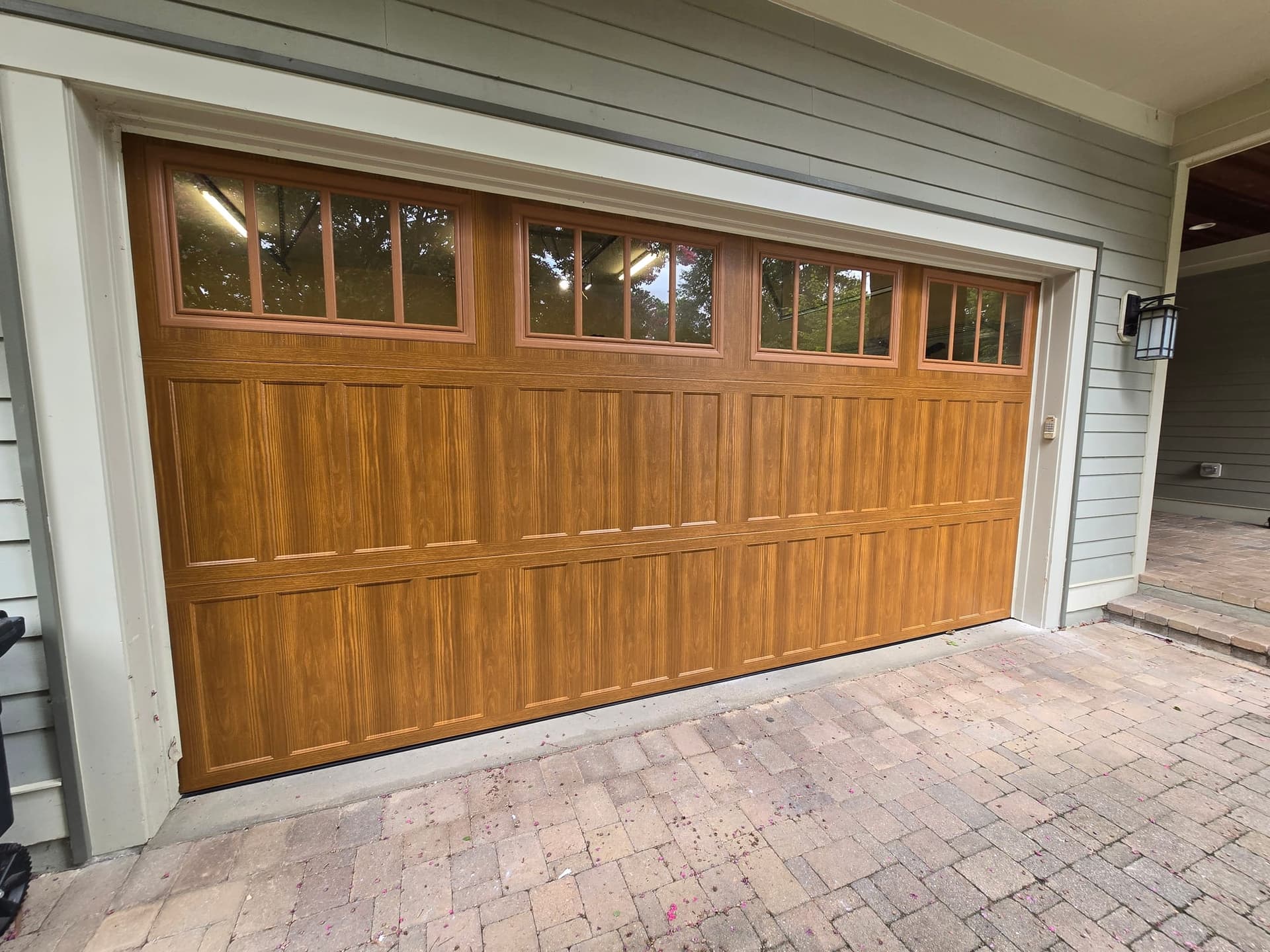
Carriage-house doors are the ones people change their minds about most. Done well, with real overlay and hardware proportioned to the opening, they make a plain brick colonial look considered. Done cheaply, with a thin stamped pattern and oversized decorative hinges, they look like a sticker. If you want the look, put the money into the door and skip the fake strap hardware.
Windows go in the top section and they change a garage more than photos suggest. A dim garage becomes a room where you can find things. They also add weight and cost, and clear glass at eye level on an alley garage is an invitation, so frosted or obscure glazing is usually the right call out there.
Color has opened up in the last few years. Charcoal, bronze, and black are stocked now instead of special-ordered, and dark doors have caught on fast on white and light-brick houses. A dark door on a south-facing garage will run hotter, which argues for insulation behind it rather than against the color.
A real one from Gaithersburg
Collin in Gaithersburg had us out for a quote on a new door. He said afterward that we recommended exactly what he needed without trying to sell him on bells and whistles, and that the door was installed within a week.
That is the whole job description on an installation call. He had an opening to fill and a number he wanted to stay under, and one door in the catalog fit both. The version of that visit where somebody walks in, starts at the top of the price list, and negotiates down is what most people brace for, which is why homeowners treat a design consultation like a sales appointment. Garage door installation in Gaithersburg covers everything from Kentlands alley garages to Montgomery Village doors from the 1970s, and the right door is different on every one of those streets. Very few of them are the most expensive one on the truck.
Do you need a permit?
In Montgomery County, a like-for-like replacement does not require a permit as long as you are not altering the opening. Widening a single into a double, changing the header, or touching structure is a different project and does need one. Rules vary across the DMV, so we tell you before the job starts if yours crosses that line.
When the door you have is fine
Plenty of doors do not need replacing, and we will say so. One bad panel is a panel job. A single failed spring on a sound twenty-year-old door is a repair, not a reason to go shopping. Replacement earns its keep when the panels are failing structurally, when the door is genuinely wrong for the house, when the repairs have started stacking up, or when you are listing and the door is the first thing in the photo.
If you are weighing one against the other, the what common garage door repairs cost around here guide has ranges for each individual fix, which is the honest way to work out whether a repair buys you five more years or six more months.