

Why does a garage door get noisy before it breaks?
A garage door has a few dozen moving parts, and most of them wear out slowly. A busy household runs the door a thousand times a year or more, so a roller that was fine in March can be dragging by October. Wear almost always gets loud before it gets expensive.
When two causes are possible, a tech confirms it on site before quoting anything. You approve one flat price before any work starts.
Why is my garage door grinding?
Grinding while the door travels is usually the rollers. Cheap plastic rollers wear flat over time, and a flat roller drags through the track instead of rolling. Sealed nylon rollers run quieter and last longer, and swapping them is one of the most noticeable upgrades you can make to an older door.
A Gaithersburg homeowner called us about an emergency roller problem, and it turned out to be a simple fix. Jonathan got there promptly and had the door working again fast, according to a review from Eric S. A roller is a cheap part, and when it goes the door tells you loudly. Detached and alley-loaded garages, like the rear-loaded ones in Kentlands and Lakelands, put extra wear on rollers and tracks, so garage door repair in Gaithersburg sees a lot of these.
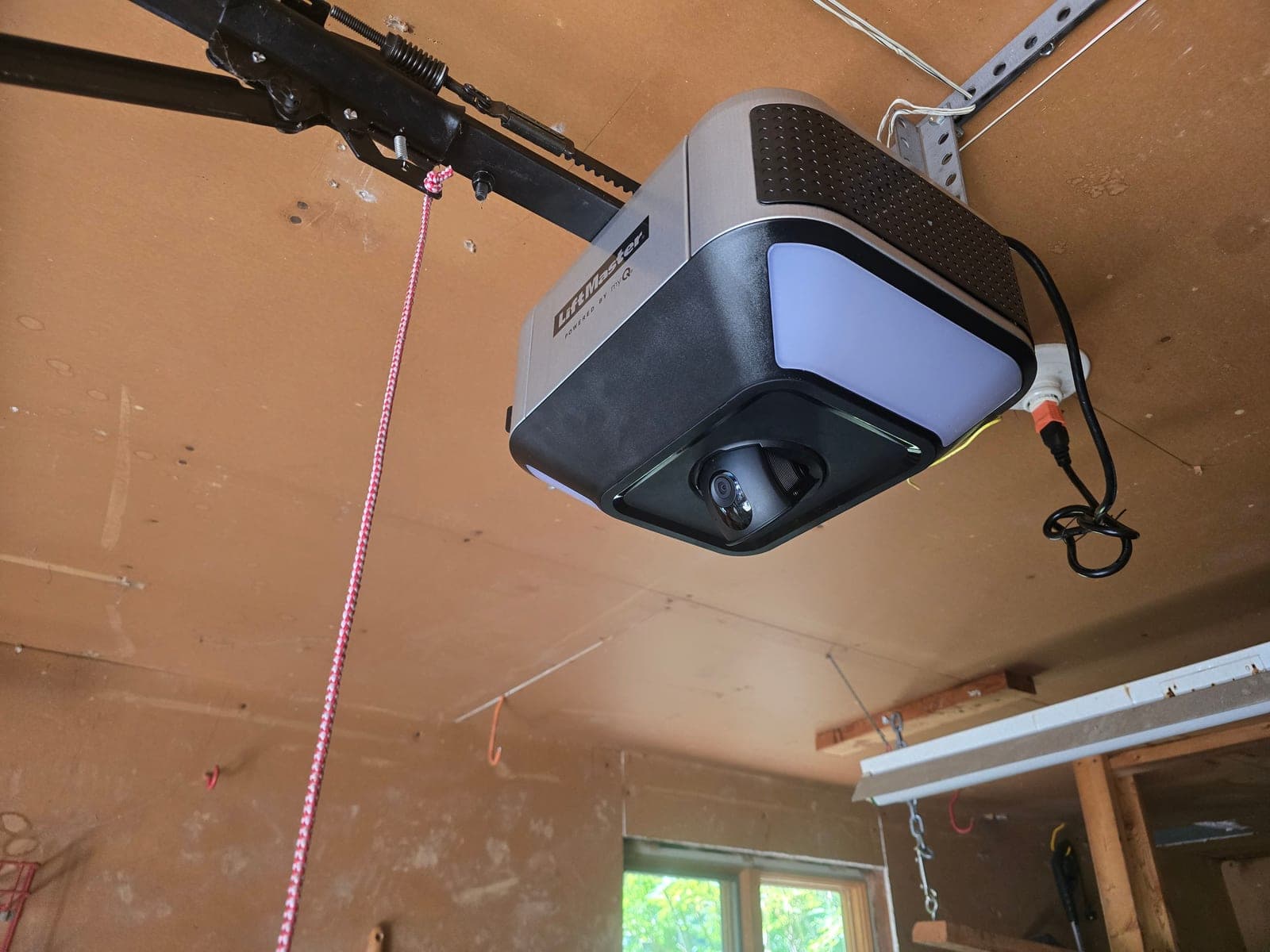
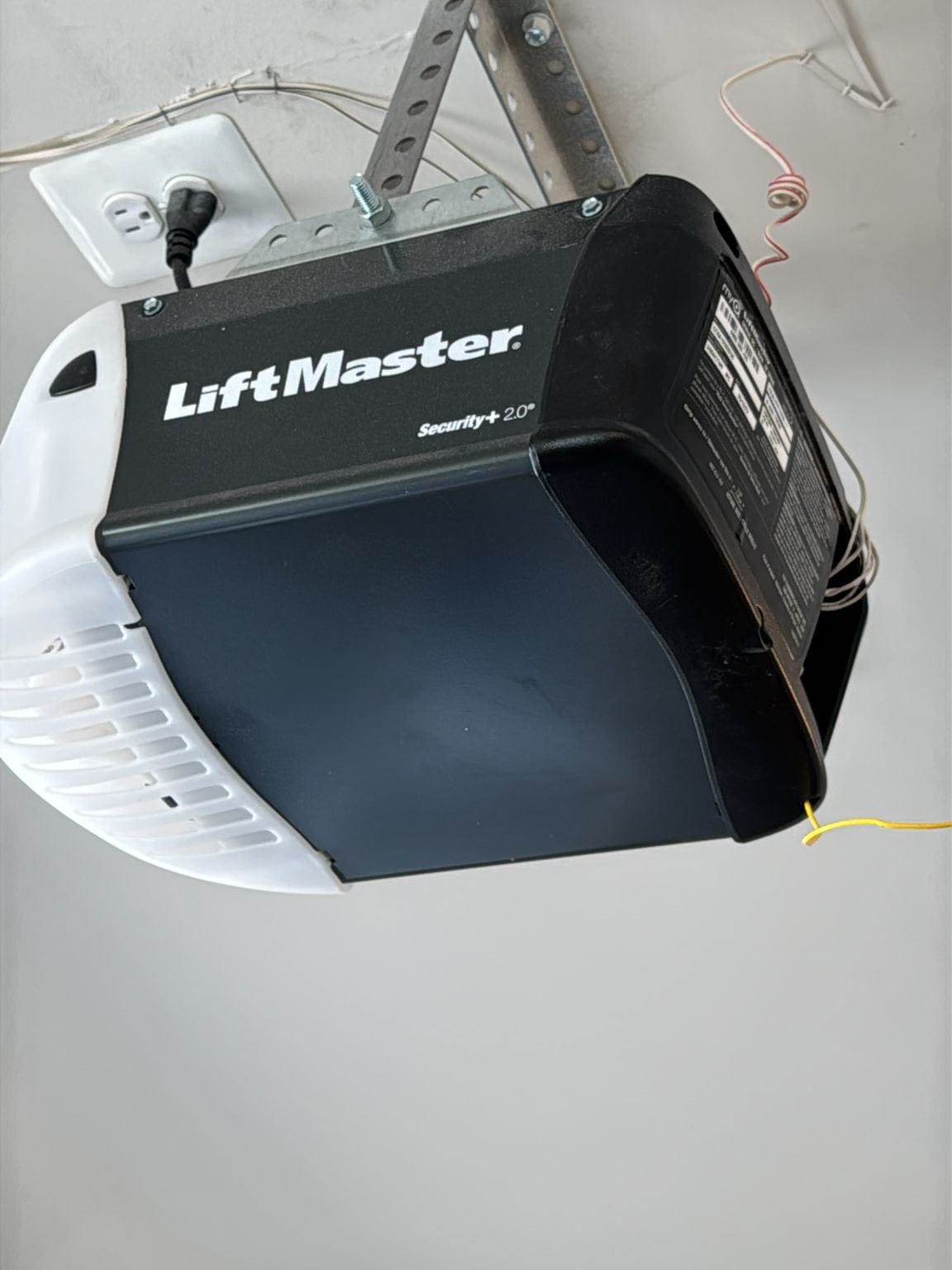
If the grinding comes from the motor head instead of the track, and the door moves slowly or hesitates, the nylon drive gear inside the opener is wearing. Keep running it and the teeth strip, and then the opener turns freely while the door stays put. A worn drive gear caught early is a routine garage door opener repair, and on an older unit we price it against a replacement so you can compare.
Why did my garage door make one loud bang?
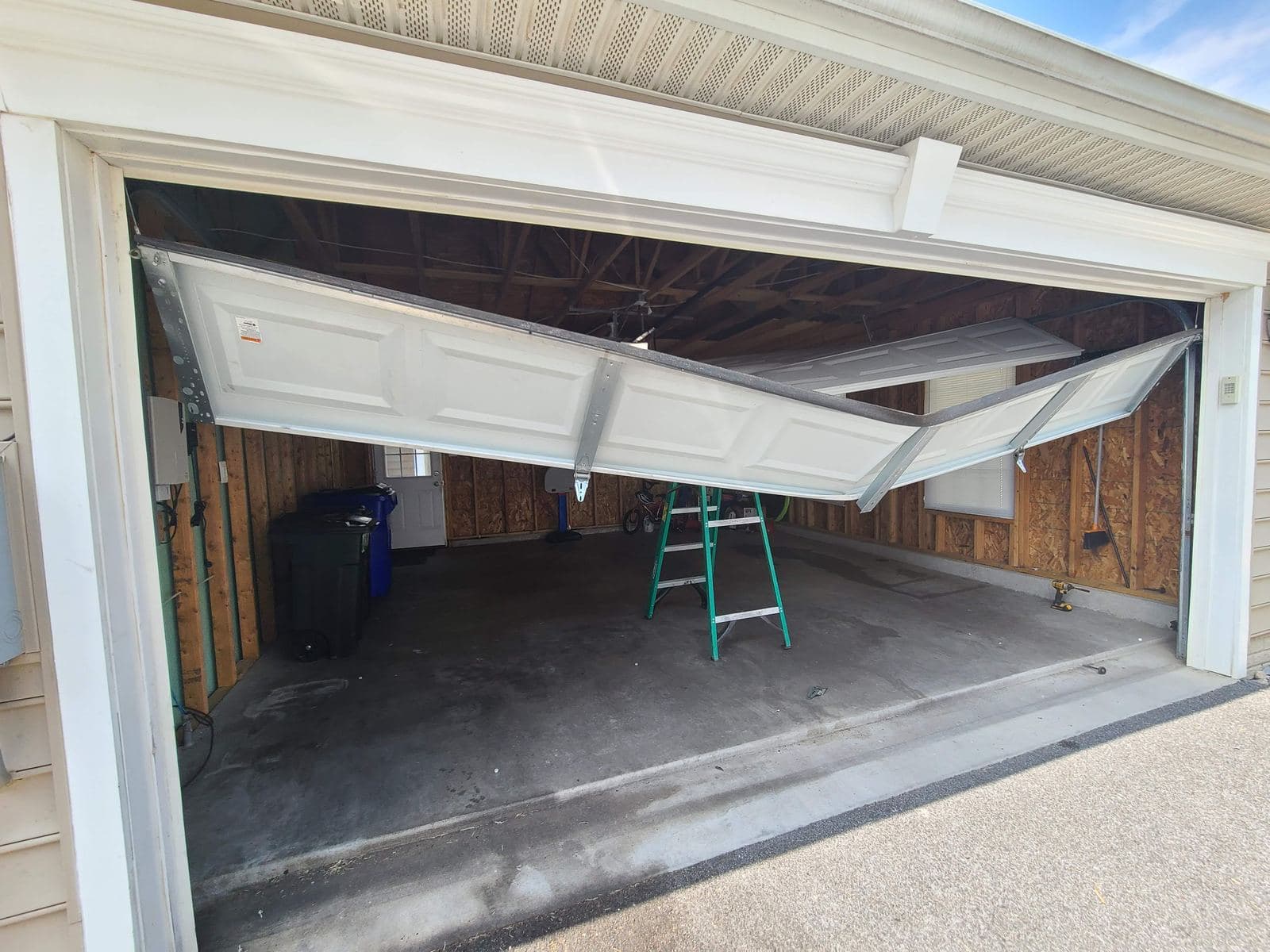
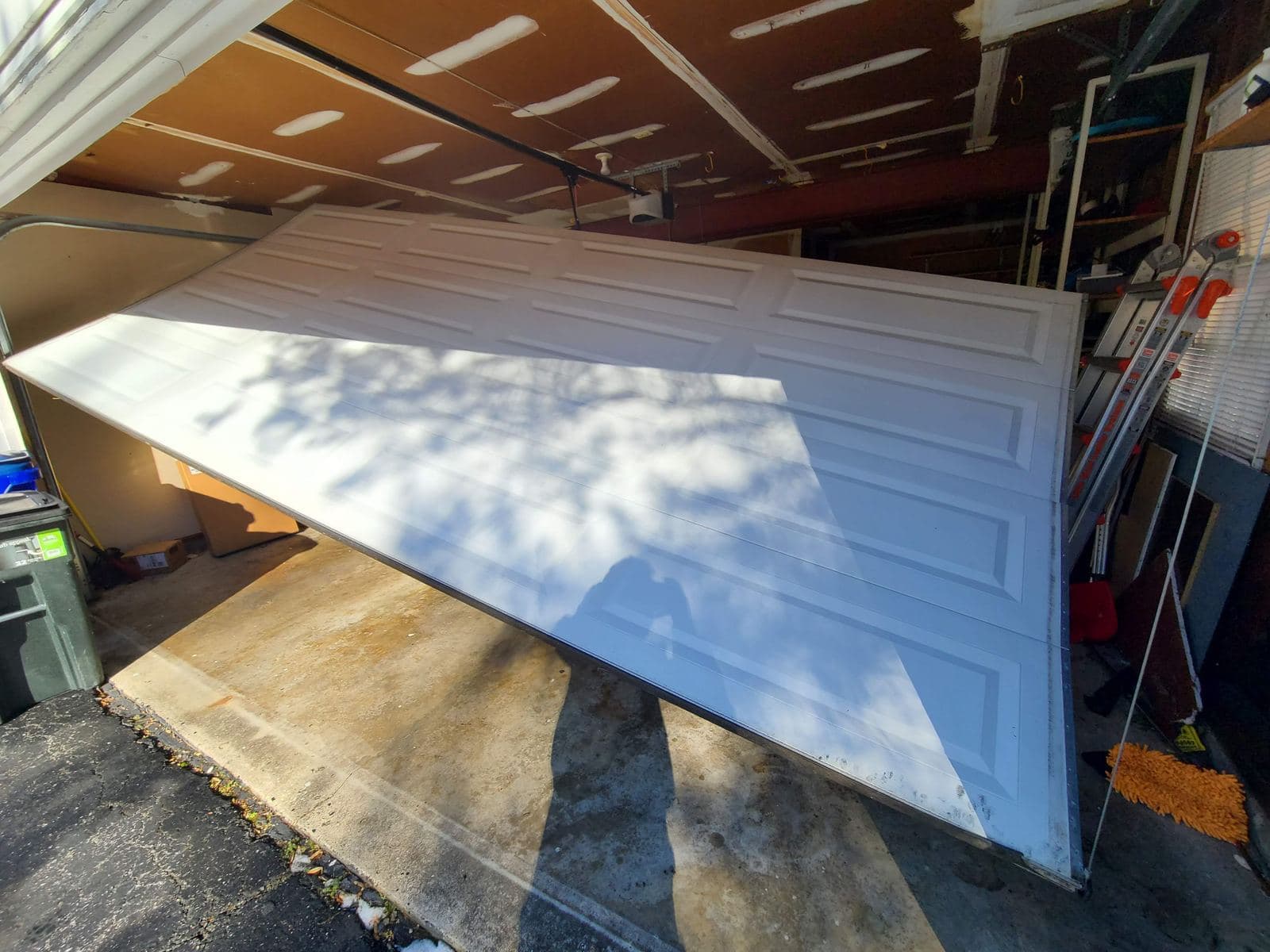
A single bang that sounds like a firecracker in the garage is almost always a spring breaking. Afterward the door feels far too heavy to lift, or the opener hums and only moves it a few inches. Don’t run the opener and don’t force the door. The springs carry the door’s weight, and without them the full load lands on the motor and a couple of thin cables.
Springs break because they wear out. A standard torsion spring is rated for about 10,000 open-close cycles, the baseline set by ANSI/DASMA 102, the industry standard for residential sectional garage doors. A household running the door four times a day uses that up in about seven years. Here’s how a cycle rating turns into years on your door.
Call for replacing a broken torsion spring. Our guide to what to do right after a snap covers a door stuck open or closed.
Why does my garage door keep popping as it opens?
Popping that repeats as the door rises is different from the single bang. It usually means a section is binding in the track, a hinge is dry or cracked, or the door is out of balance and fighting itself. It rarely stays minor. A cracked hinge can take a section’s alignment with it.
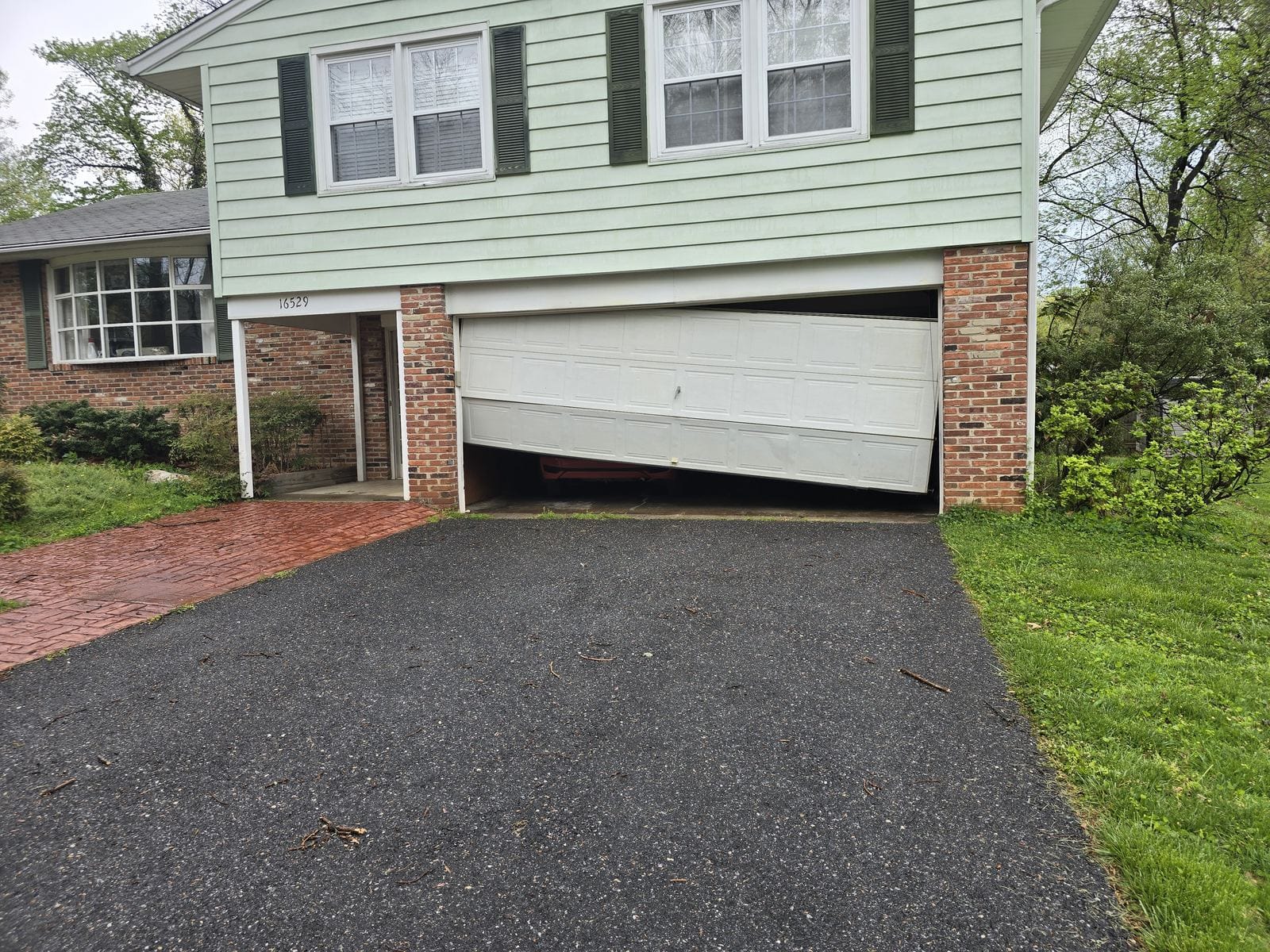
To check it, close the door, pull the red emergency cord, lift the door by hand to about waist height, and let go. A balanced door stays put or drifts a few inches. If it slams down or shoots up, the springs aren’t carrying the weight, and that’s a tech job. Don’t try this if you’ve heard a bang or the door already feels heavy.
Why is my garage door squealing?
Squealing is the easy one. Dry hinges and roller bearings squeal, and so do spring coils. A proper lubrication during a 33-point garage door tune-up usually silences all of them. Use a garage-door silicone spray or white lithium grease. Skip WD-40. It’s a cleaner, not a lubricant, and it strips the grease that was working.
If it only squeals on cold mornings, that is old grease stiffening. It’s the same cause behind most winter opener trouble, which we cover in our cold-weather opener guide.
Why does my garage door rumble or vibrate?
A deep rumble or a vibration you can feel through the wall usually means loose hardware. Track brackets and the opener’s mounting bolts can work loose over a few years of use. It can also be balance drift, where the springs have lost a little strength and the opener is working harder than it should. A tune-up tightens the hardware and resets the balance in the same visit.
When a door makes more than one of these noises at once, it’s rarely a single part. That’s when garage door roller and hinge repair covers the whole system instead of chasing one symptom.
How much does it cost to fix a noisy garage door?
Prices here are ranges, because the right fix depends on what the tech finds. A lubrication and tune-up visit generally runs $100 to $450 or more. A full set of rollers is usually $150 to $600 or more, higher for larger or heavier doors. Spring replacement across the DMV runs $200 to $800 all-in, and heavy or custom doors run more. An opener drive gear repair can run $150 to $600 or more, and a failing opener may be cheaper to replace than repair, which we price both ways when it’s close. You get one flat price, approved before any work starts.
None of these noises on its own means the door needs replacing. If the panels are straight and the frame is solid, a noisy door is a repair. When you are not sure, here’s how to weigh garage door repair against replacement.